Best time to visit
You can visit Chile at any time of year, though conditions vary depending on which region you're heading to.
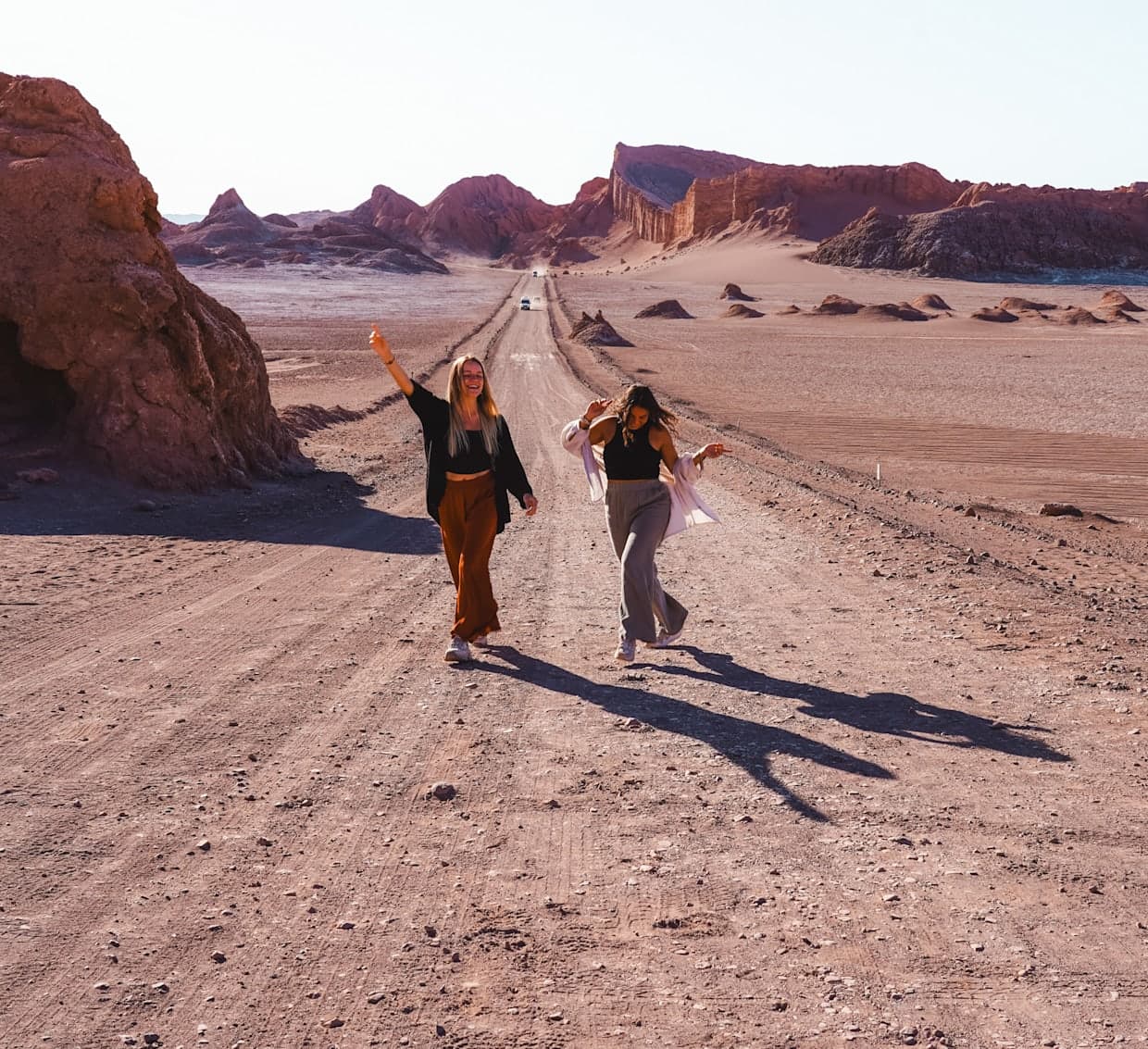
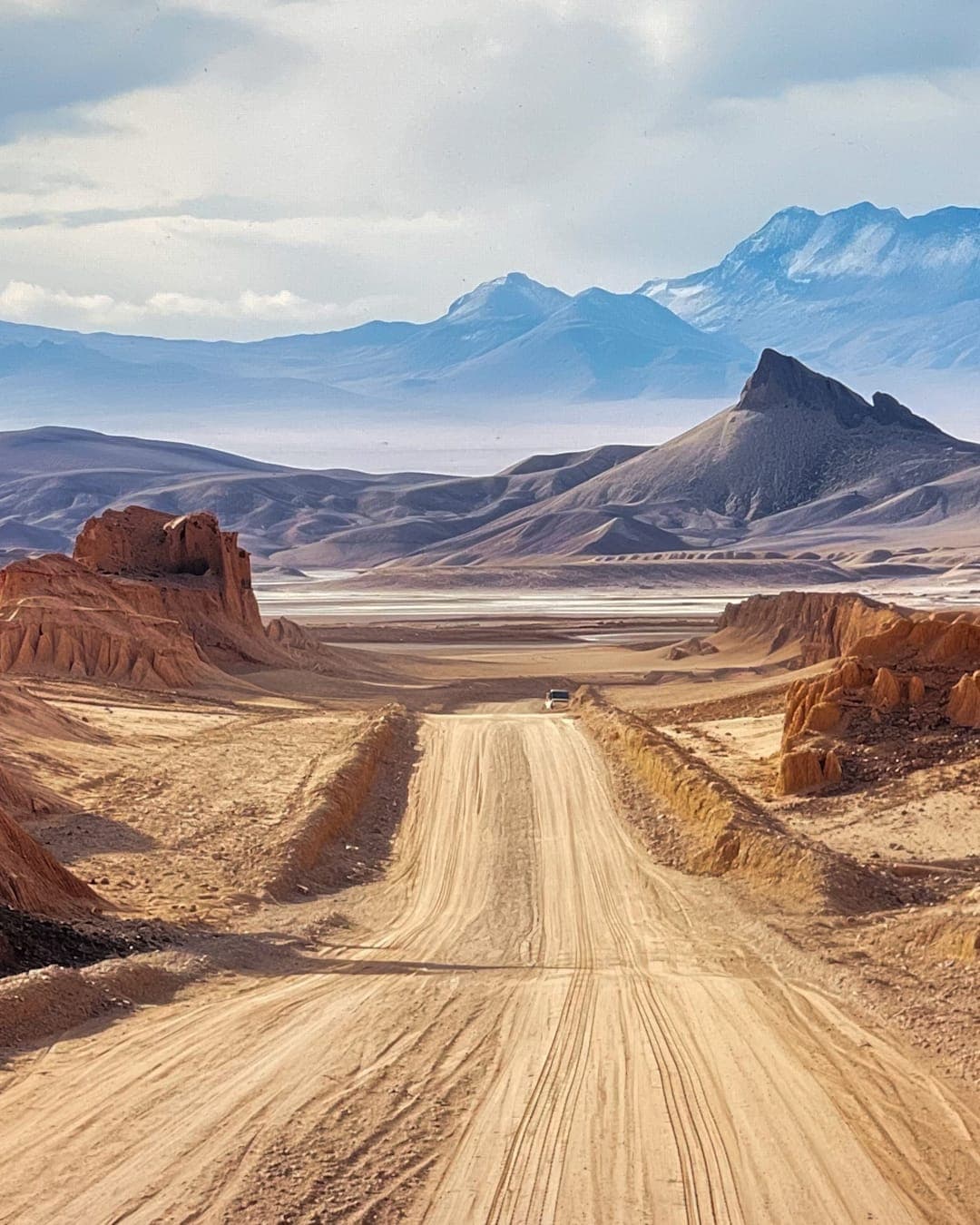
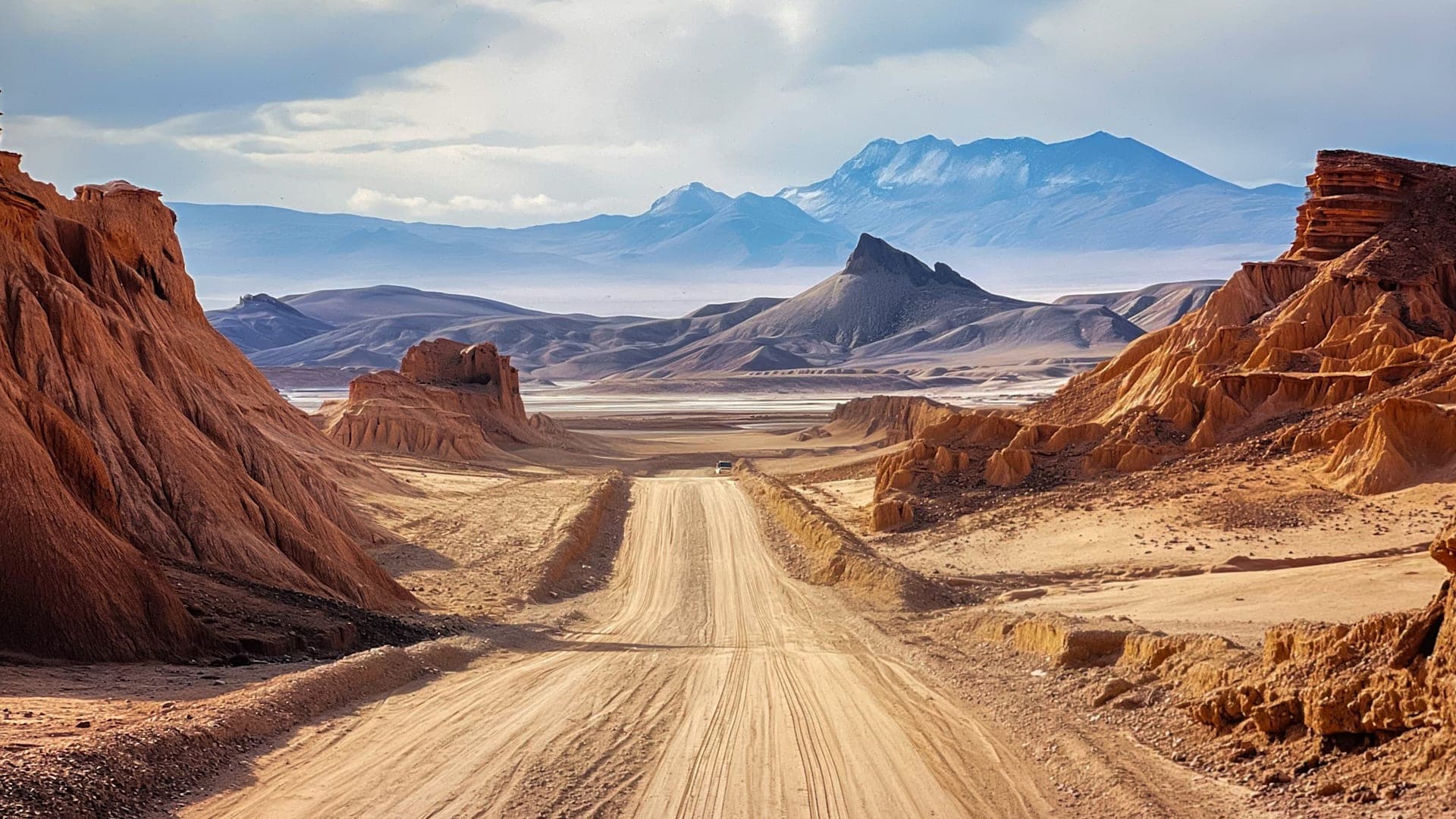
Chile is the most extraordinary country in the world, at least geographically. With 4,300 kilometres of Pacific coastline and more climate zones than almost anywhere else on earth, no two days feel the same. In the north, the Atacama Desert makes you feel as though you've left the planet entirely: bone-dry salt flats, geysers erupting at dawn and flamingos standing against snow-capped volcanoes. In the south, Patagonia awaits with fjords, glaciers, open steppe and Torres del Paine, where granite spires tear through the sky. In between, you'll discover wine regions, colonial towns and the Chilean Lake District. A round trip around Chile means recalibrating your entire sense of what extreme really looks like.
You can visit Chile at any time of year, though conditions vary depending on which region you're heading to.
Chile's currency is the Chilean peso (CLP).

Depending on your stopover, the flight takes around 16 to 20 hours.

The official language is Spanish, though you'll get along perfectly well with English.
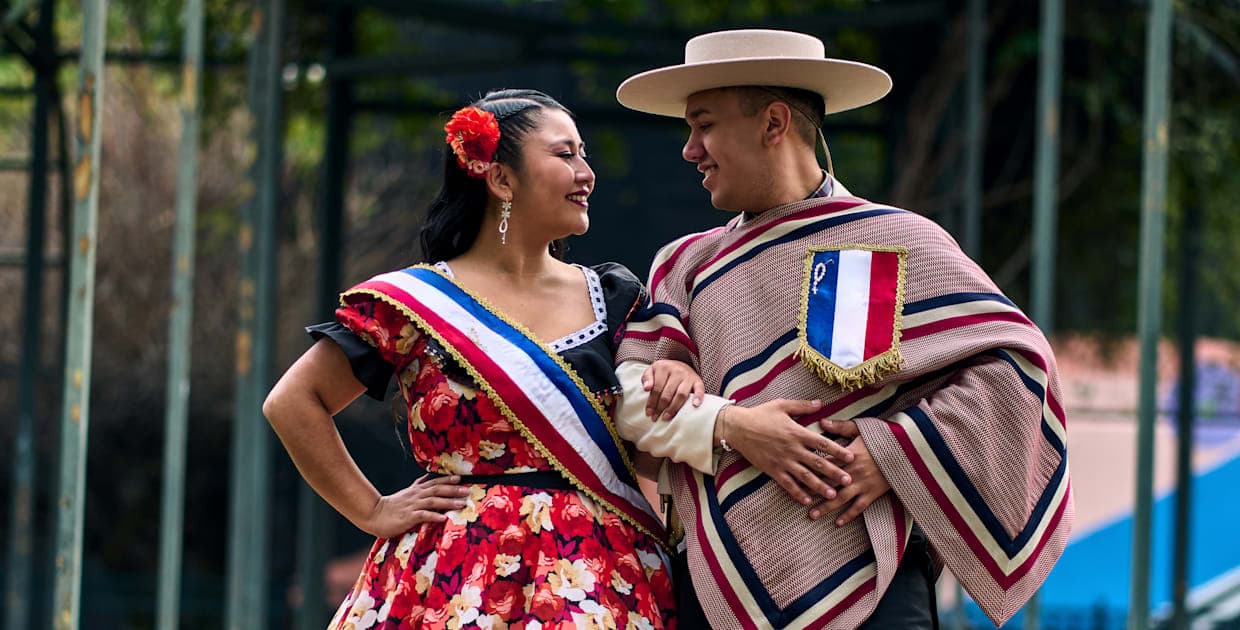
Chile is full of highlights, but these must-sees belong on your bucket list.
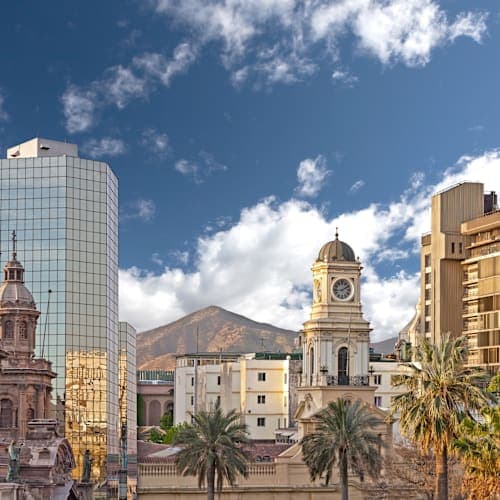
Santiago de Chile is loud, fast and full of contradictions. In Barrio Bellavista, street art meets glass facades, while at the Plaza de Armas, business people and street musicians share the same coffee. Cerro San Cristóbal rises above the sprawling city with the Andes looming behind it. Valparaíso does things entirely differently. No high-rises, just steep hillsides, street art covering every wall and a harbour you smell and hear before you ever see it. Pablo Neruda, Latin America's most celebrated poet, lived here twice. South of the city, the wine regions begin: Maipo Valley, Colchagua and Casablanca, broad, sun-drenched valleys best enjoyed with a Pisco Sour in hand as the golden hour sets in.
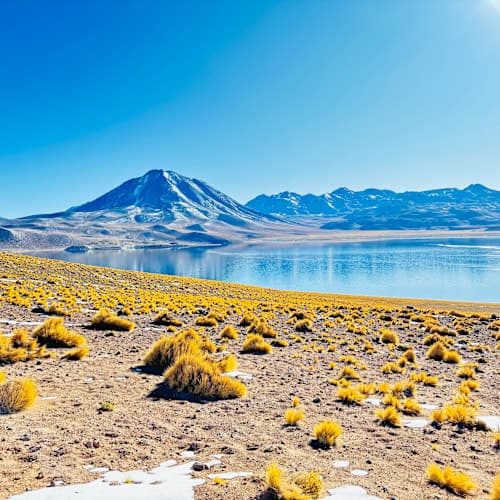
The Atacama is the driest desert on earth. There are no clouds, no greenery and no sound beyond the wind. In some places, it hasn't rained in decades, and the landscape makes that plainly clear. Salt flats mirror the sky like glass, and rocks stand in shapes that water has never had the chance to smooth. The Valle de la Luna makes you lose all sense of which planet you're standing on, while Rainbow Valley adds an astonishing layer of colour to the scene. Before sunrise, when the Atacama is still cloaked in darkness, the El Tatio geysers shoot steam 30 metres into the air with the silhouette of Licancabur volcano rising behind them. San Pedro de Atacama is your base for all of it, a small, dusty town sitting beneath the clearest night sky in the world.
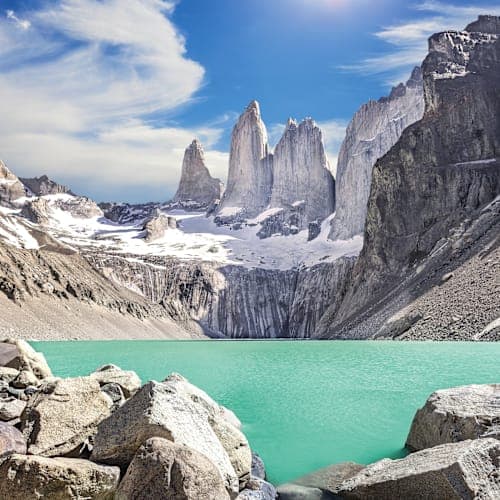
Patagonia begins where the map seems to run out. There's endless steppe and landscapes that look older than time itself, all swept by a wind that never lets up. Then, at some point, the clouds part to reveal three granite towers standing 2,800 metres tall, with glacial turquoise lakes spread out at their feet. Torres del Paine National Park ranks among the most dramatic landscapes on earth. Punta Arenas is Chile's southernmost city: a place of historic architecture and a harbour on the Strait of Magellan, where it feels as though time simply stopped one day and never started again. From there, Tierra del Fuego opens up: a ragged coastline, ancient glaciers and a silence that settles heavily around you.
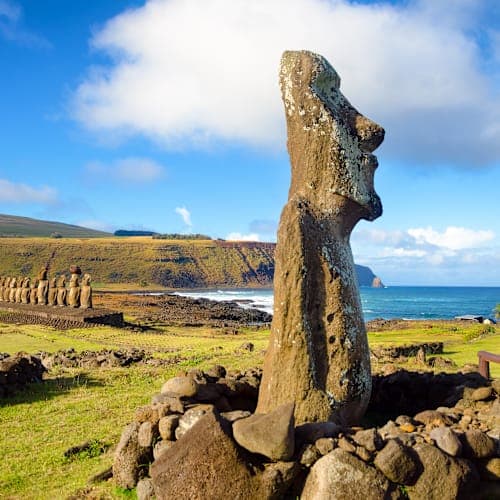
Easter Island lies 3,700 kilometres from the Chilean mainland, one of the most remote inhabited places on earth. Rapa Nui, as the indigenous people call it, is a volcanic speck in the Pacific: green hills, black lava coastlines and turquoise water stretching to the horizon in every direction. In the evenings, the sky turns colours that need no filter. Keeping watch over it all are the Moai. Almost 1,000 stone statues carved from rock centuries ago by the Rapa Nui people, their faces turned towards the interior of the island. To this day, nobody knows exactly how they got there.