Best time to visit
You can visit Brazil at any time of year, though the best month to go depends on where you're heading.

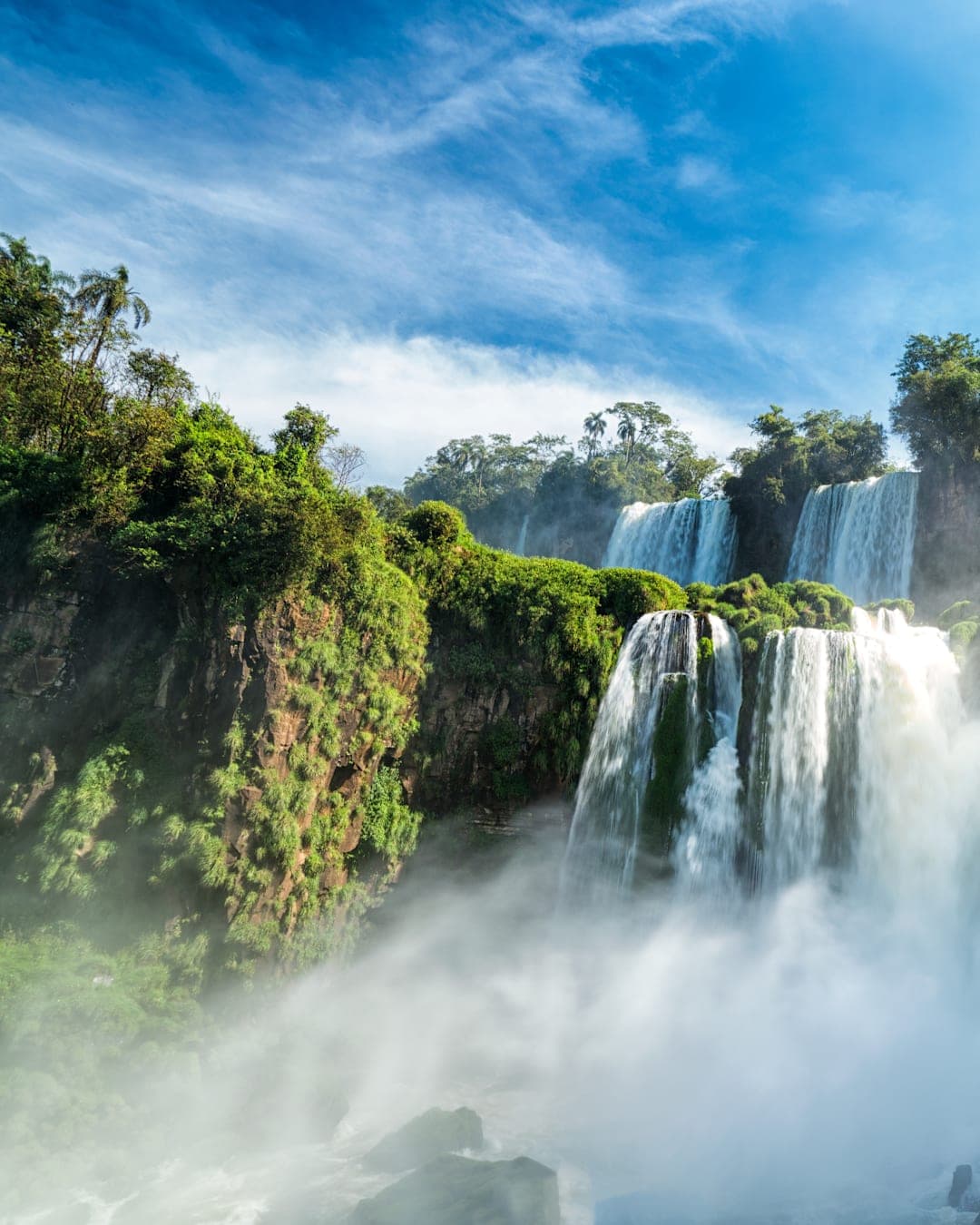
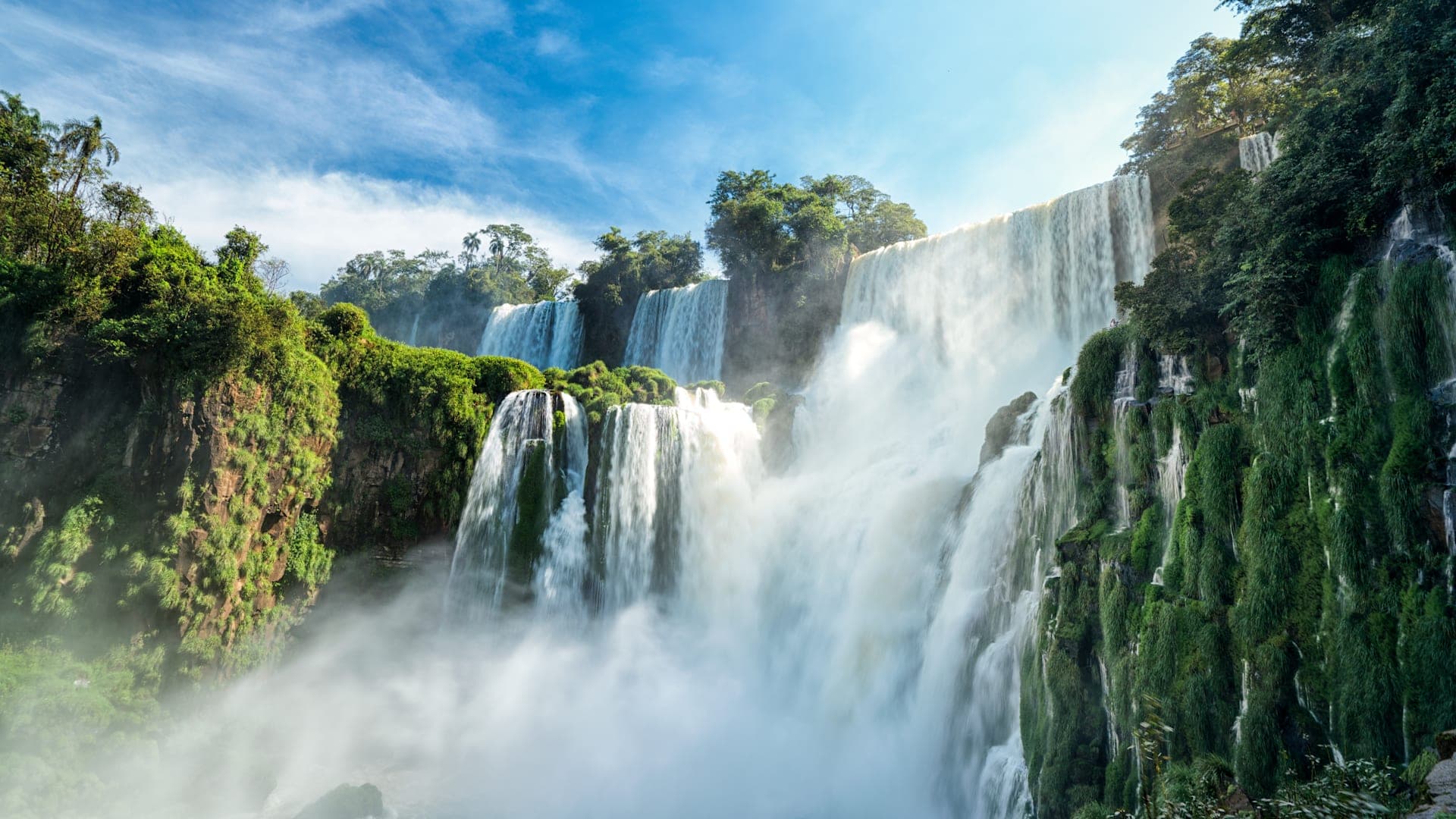
Brazil is the ultimate destination of contrasts and extremes, and that's exactly why it belongs on every bucket list. In the Amazon rainforest, you'll sleep in a hammock as the jungle comes alive around you after dark. You'll feel the Iguazú Falls beneath your feet long before the thundering cascades come into view. Along the seemingly endless beaches, life pulses day and night. In colonial cities like Salvador, music drifts from every alleyway and every facade is painted a different colour. São Paulo's skyline reaches into the sky. And then there's Rio de Janeiro – the Cristo Redentor watching over the city, Copacabana Beach, Sugarloaf Mountain and the rhythm of samba. Brazil gives you images that stay with you long after you've returned home and experiences that no photograph can do justice.
You can visit Brazil at any time of year, though the best month to go depends on where you're heading.
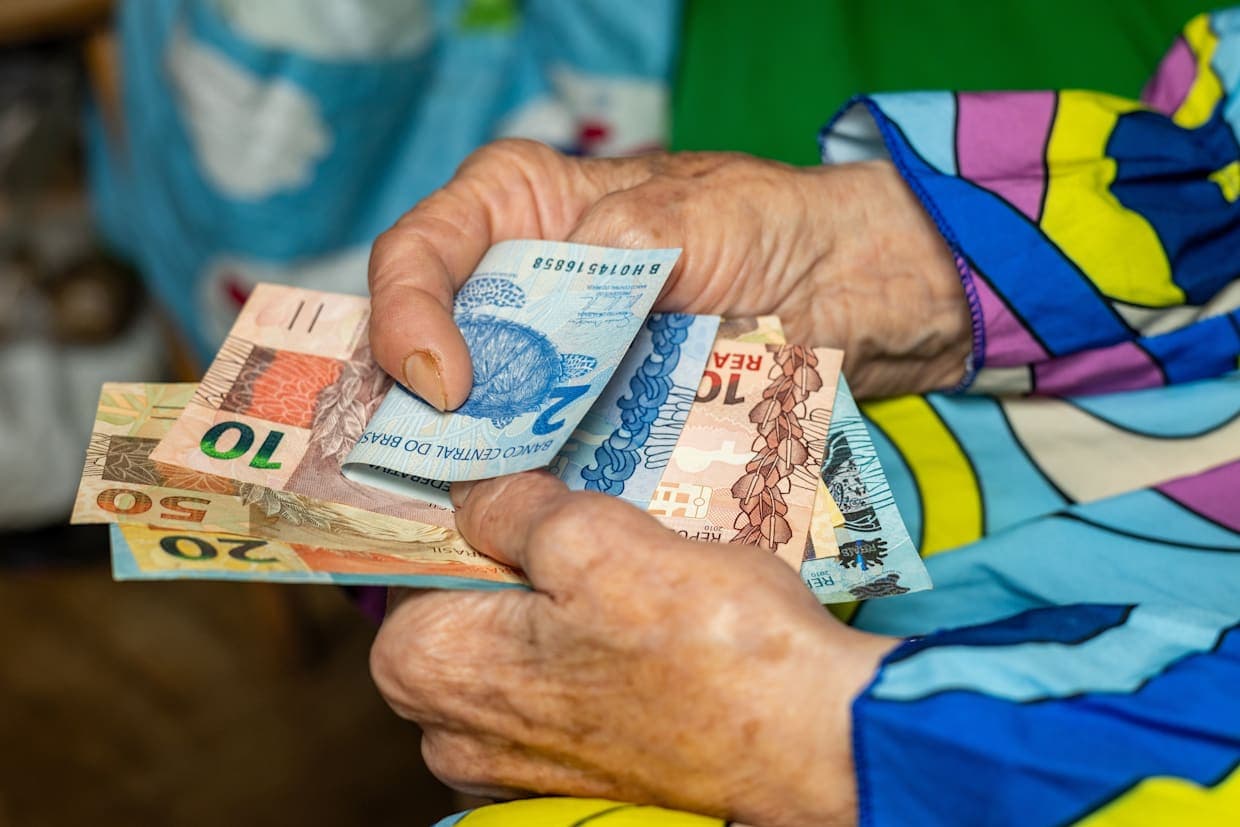
Brazil's currency is the Real (BRL).
A direct flight takes around eleven to twelve hours.

Portuguese is spoken in Brazil – though in tourist areas you'll get along just fine with English.
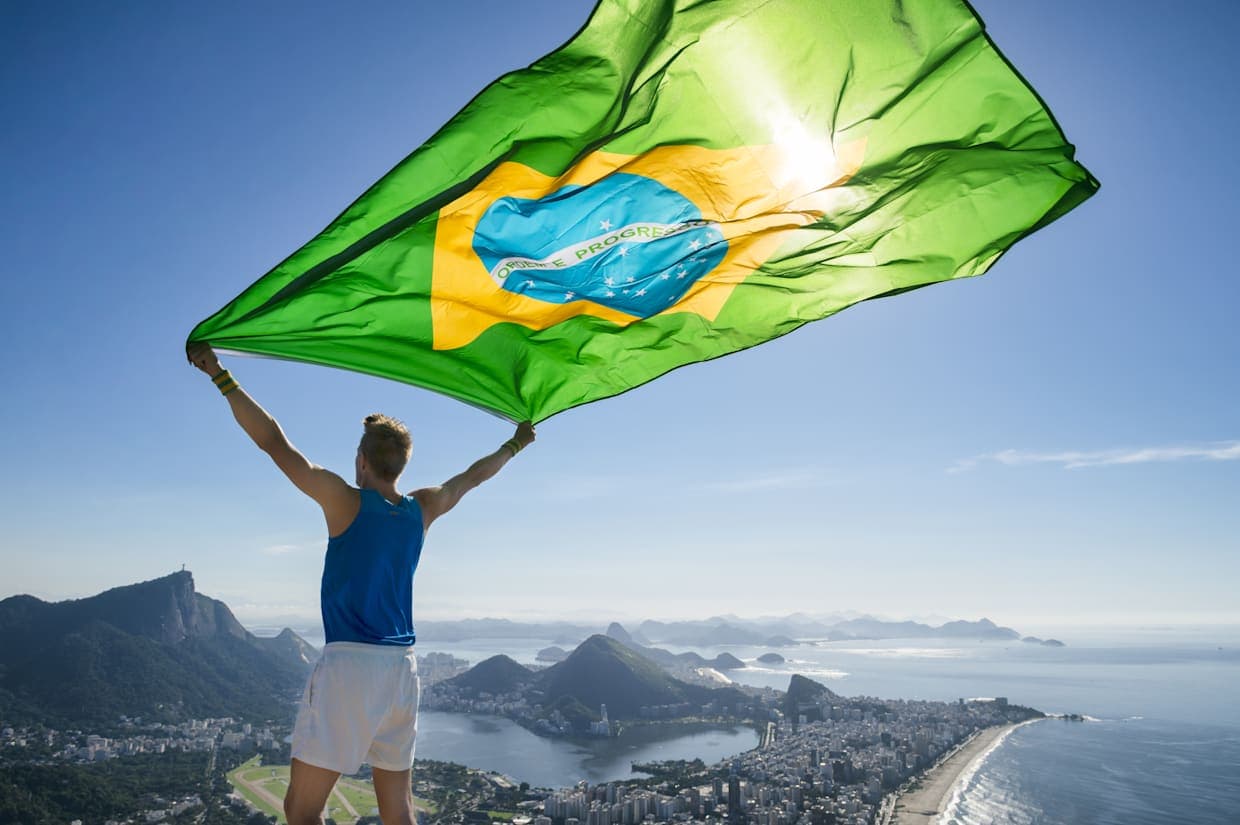
Brazil is full of highlights, but these must-sees belong on your bucket list.
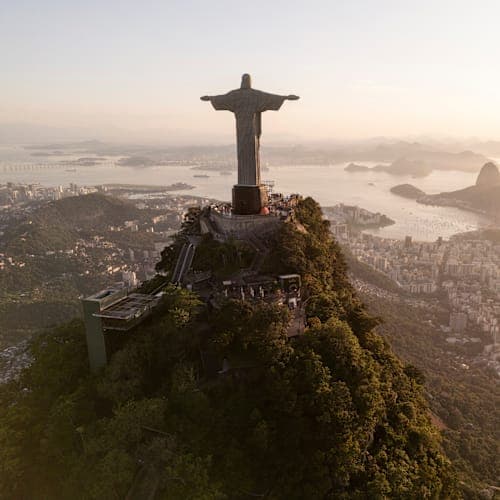
Corcovado and Copacabana are less than five kilometres apart, yet these two worlds could hardly feel more different. The Cristo Redentor stretches its arms wide over a city that spends its days lost in beach life -- the tang of sea salt in the air and caipirinhas clinking -- before the whole city gives itself over to samba rhythms after dark. From Sugarloaf Mountain, you can see how Ipanema and the favelas share the same city, and during the world-famous Carnival, all of Rio dances on a single street. You'll swim in the Atlantic where the grey asphalt of the Avenida finally meets the shore. Ilha Grande – a car-free jungle island just off the coast of Rio - proves that the best trips to Brazil often begin where the noise of the city fades away.
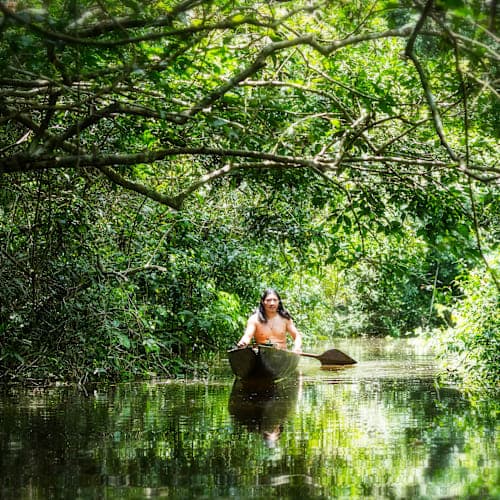
The Amazon rainforest covers 5.5 million square kilometres -- that's larger than Germany, France, Spain and Italy combined. It's also home to a tenth of all animal species on Earth. Right in the middle of it all sits Manaus, a city of millions surrounded not by asphalt but by nothing but rainforest. From here, you'll reach a lodge that no road has ever touched, travelling entirely by boat. You'll hike through the dense green undergrowth as monkeys leap from branch to branch in the canopy above. At night, you'll hear sounds you've never encountered before, then fall asleep in a hammock with nothing but the Amazon all around you. You've never been this close to the most untouched corner of the Earth.
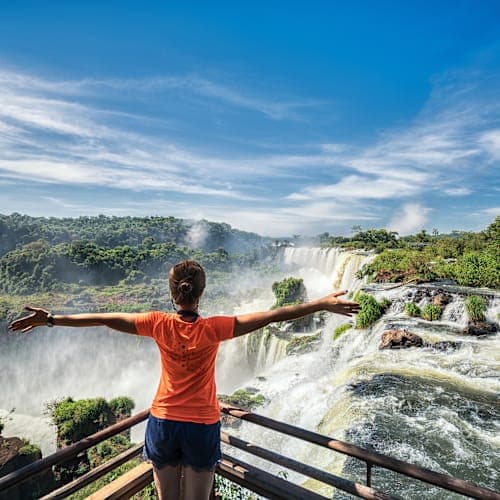
Spanning three kilometres, 275 waterfalls thunder relentlessly into the depths below -- the Iguazú Falls turn water into something that feels like an earthquake. You'll stand on walkways that jut straight into the spray as toucans fly past at eye level and the ground vibrates beneath your feet. From the Brazilian side, you can take in all 275 falls at once, while on the Argentine side you'll find yourself right in the middle of the mist. No photograph comes close to capturing the sheer force of the Iguazú Falls. You'll stand before them and understand immediately why they rank among the greatest natural wonders of the world.
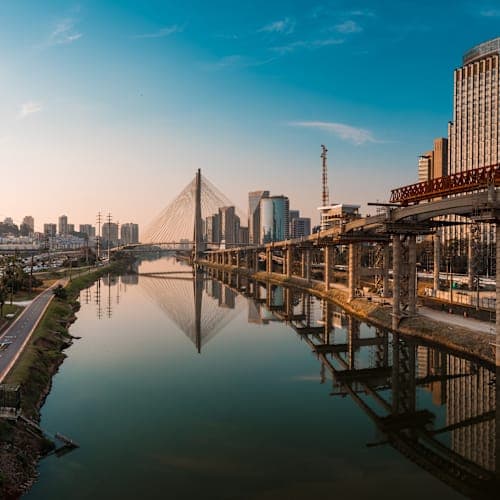
São Paulo sprawls in every direction -- 22 million people, a skyline with no end in sight and a food scene that holds its own against New York and Tokyo. The city never sleeps: by day, the business districts set the pace, and by evening Vila Madalena takes over -- São Paulo's arts and nightlife quarter, where graffiti covers entire city blocks. More than 60 nationalities compete for your attention at the table: Japanese Liberdade, Argentine steakhouses and Brazilian churrascarias. The Museu de Arte de São Paulo hangs Picasso alongside Brazilian modernism -- right in the heart of the city, directly above Avenida Paulista.
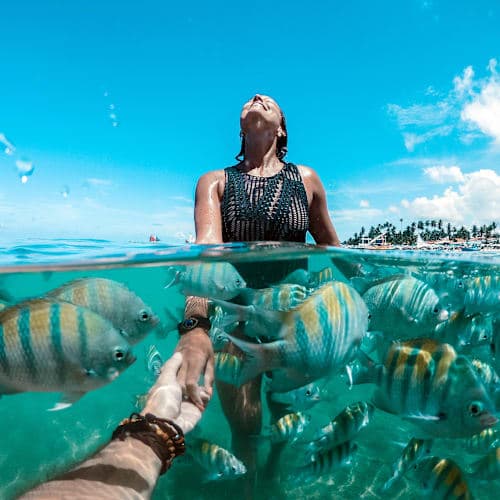
Brazil's east coast isn't a single destination -- it's a succession of entirely different worlds. Recife sits across a cluster of islands laced with canals and bridges, and just beyond it lies Porto de Galinhas: natural pools set in coral reefs and turquoise water warmer than any hotel bath. Further north, Fortaleza draws you in with endless beaches and kite surfers gliding across the Atlantic at sunset. Salvador de Bahia strikes a different note altogether -- colonial architecture in vivid yellows and blues, drumbeats drifting through open doorways and the scent of dendê oil wafting from every kitchen.