Best time to travel
Namibia always works - but the best time to visit depends on what you want to experience. The dry season from May to October is ideal for safaris.
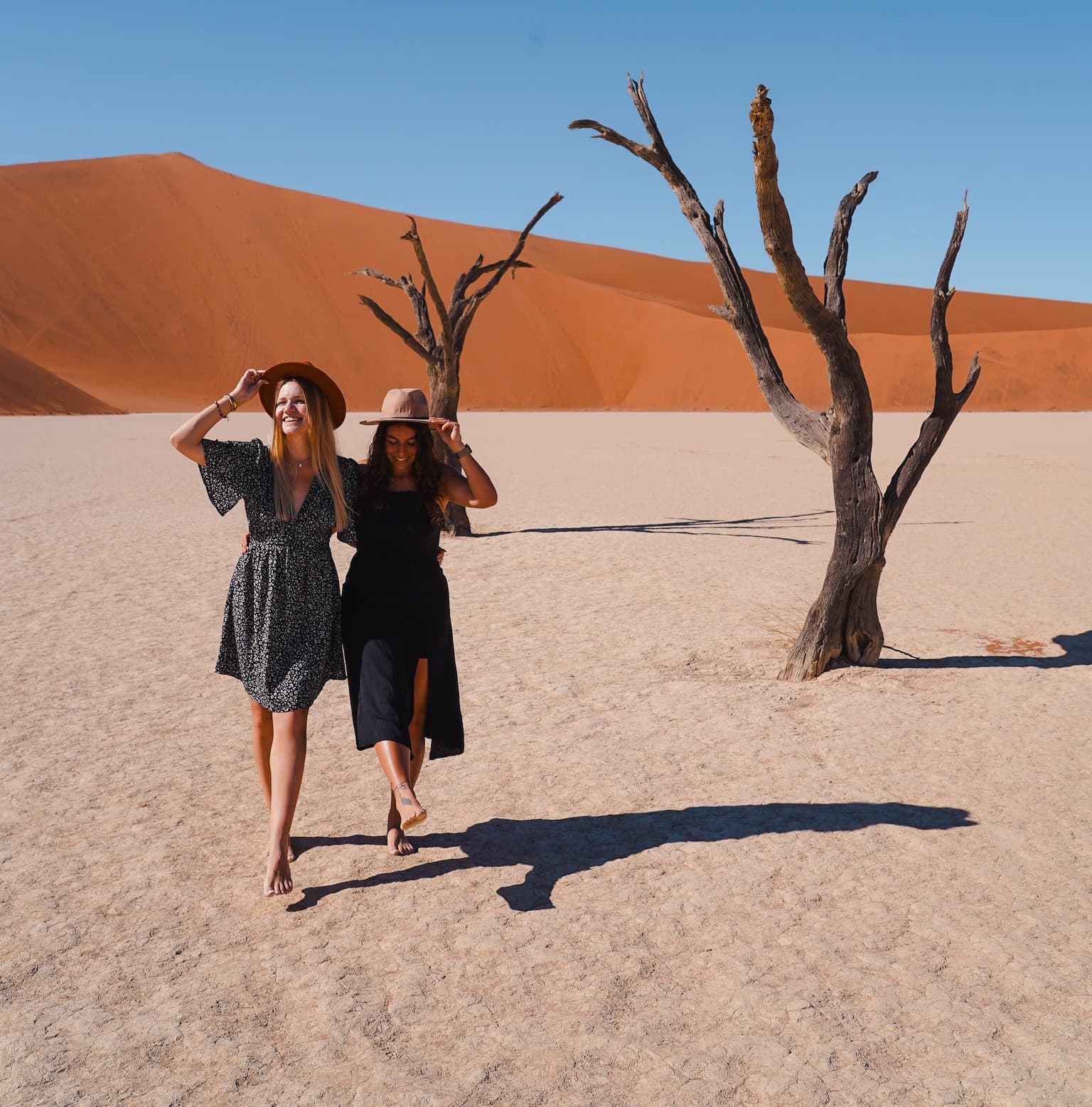
Namibia is not just a holiday, Namibia is pure magic and unforgettable. You stand barefoot in the sand while the sun bathes the dunes of Sossusvlei in flaming red. The heat shimmers, the sky burns. And you? You take a deep breath - dusty freedom. Glamping under a billion stars. Your glamping tent? In the middle of nowhere. Your view? Endlessly far. In Etosha National Park, you'll spot lions against the light, hear elephants stomping through the steppe and be closer than ever to the Big Five. On your Namibia round trip, you won't experience sights, you'll experience moments that get under your skin.
Namibia always works - but the best time to visit depends on what you want to experience. The dry season from May to October is ideal for safaris.
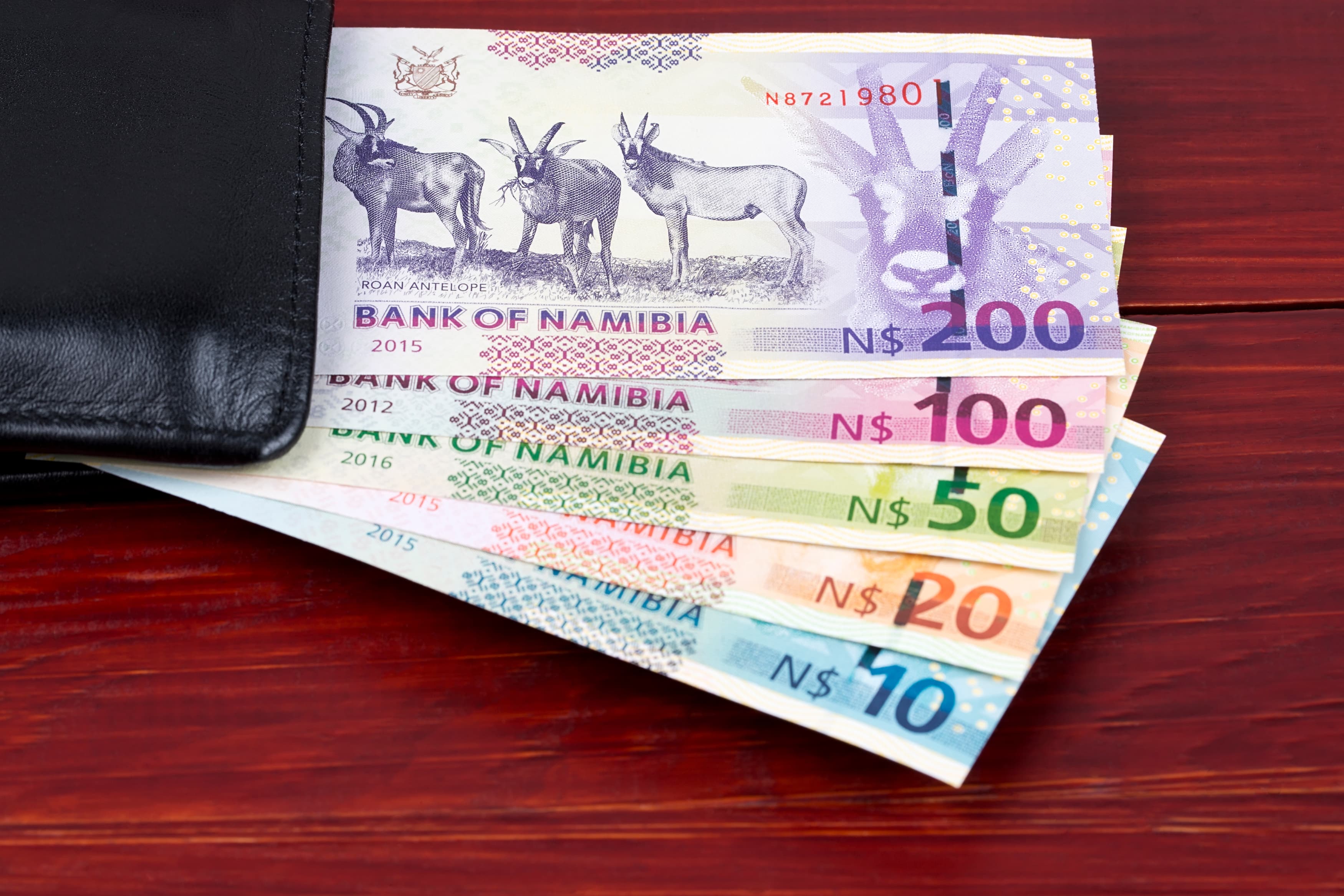
You can pay with the Namibian dollar (NAD) and South African rand (ZAR) because the currencies are pegged.
The flight time from Germany to Windhoek is around 10 hours for direct flights.
English is the official language in Namibia, but German, Afrikaans and indigenous languages are also spoken.

Namibia is full of highlights - but these sights definitely belong on your bucket list.
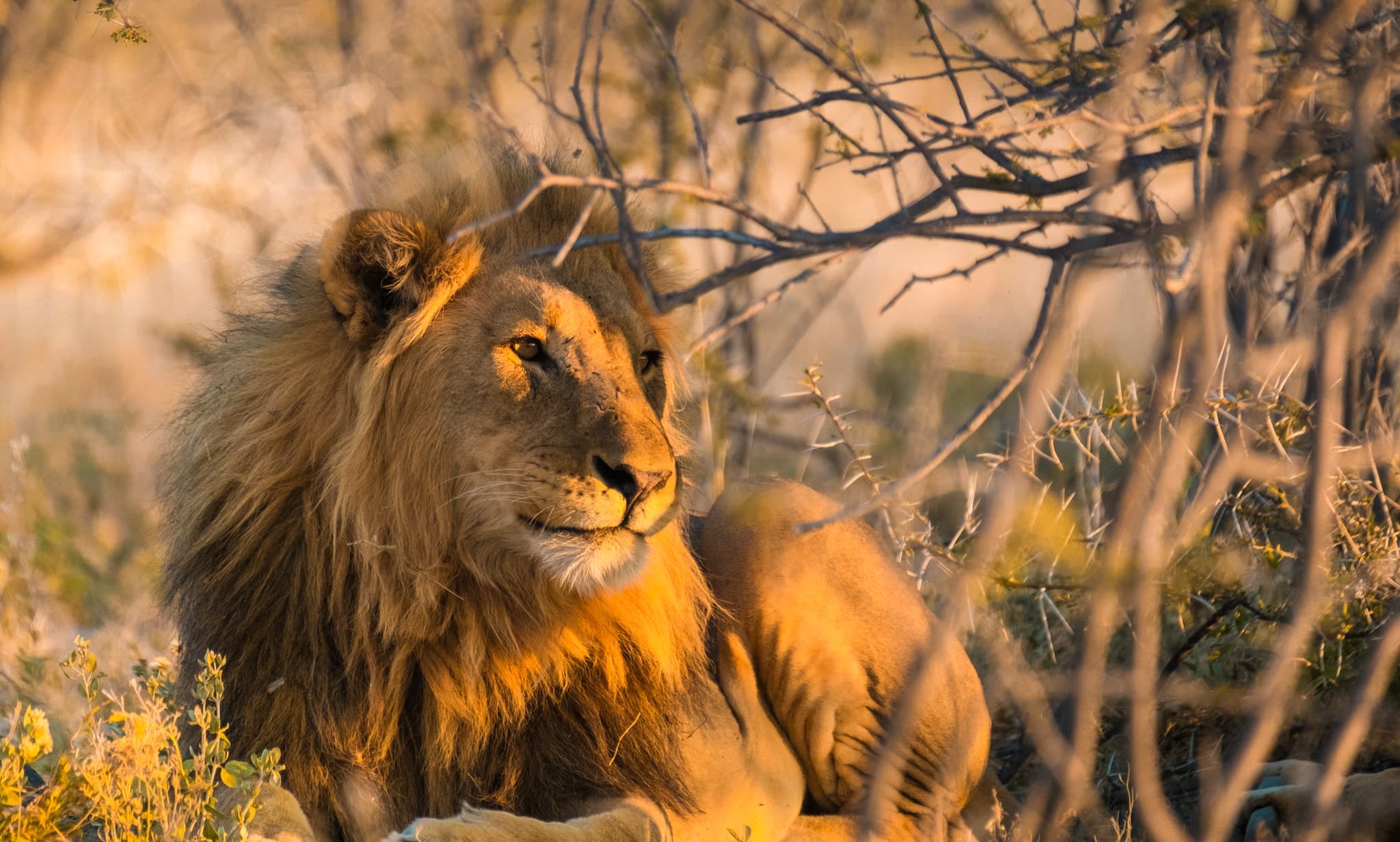
Etosha National Park is the safari highlight of Namibia. In the endless salt pan and vast plains, you will encounter the Big Five - lions, elephants, rhinos, leopards and buffaloes - as well as giraffes, zebras and countless antelopes. The spectacle is particularly spectacular at the waterholes: herds of elephants trudge in, lions lurk in the shadows, zebras join them - and suddenly life pulsates in front of you. Whether as a game drive lasting several days or as a stage of your round trip: Etosha is pure wilderness.
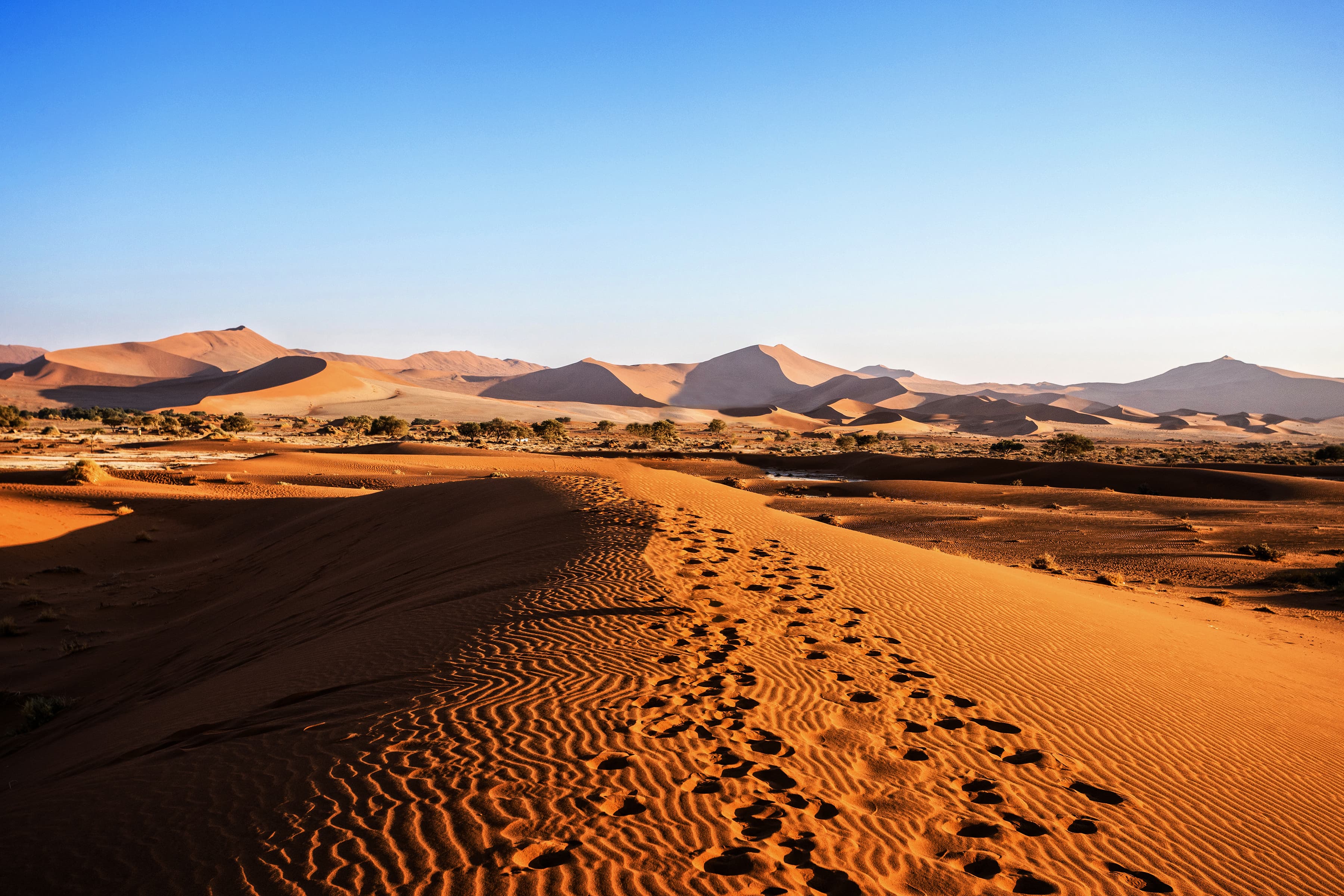
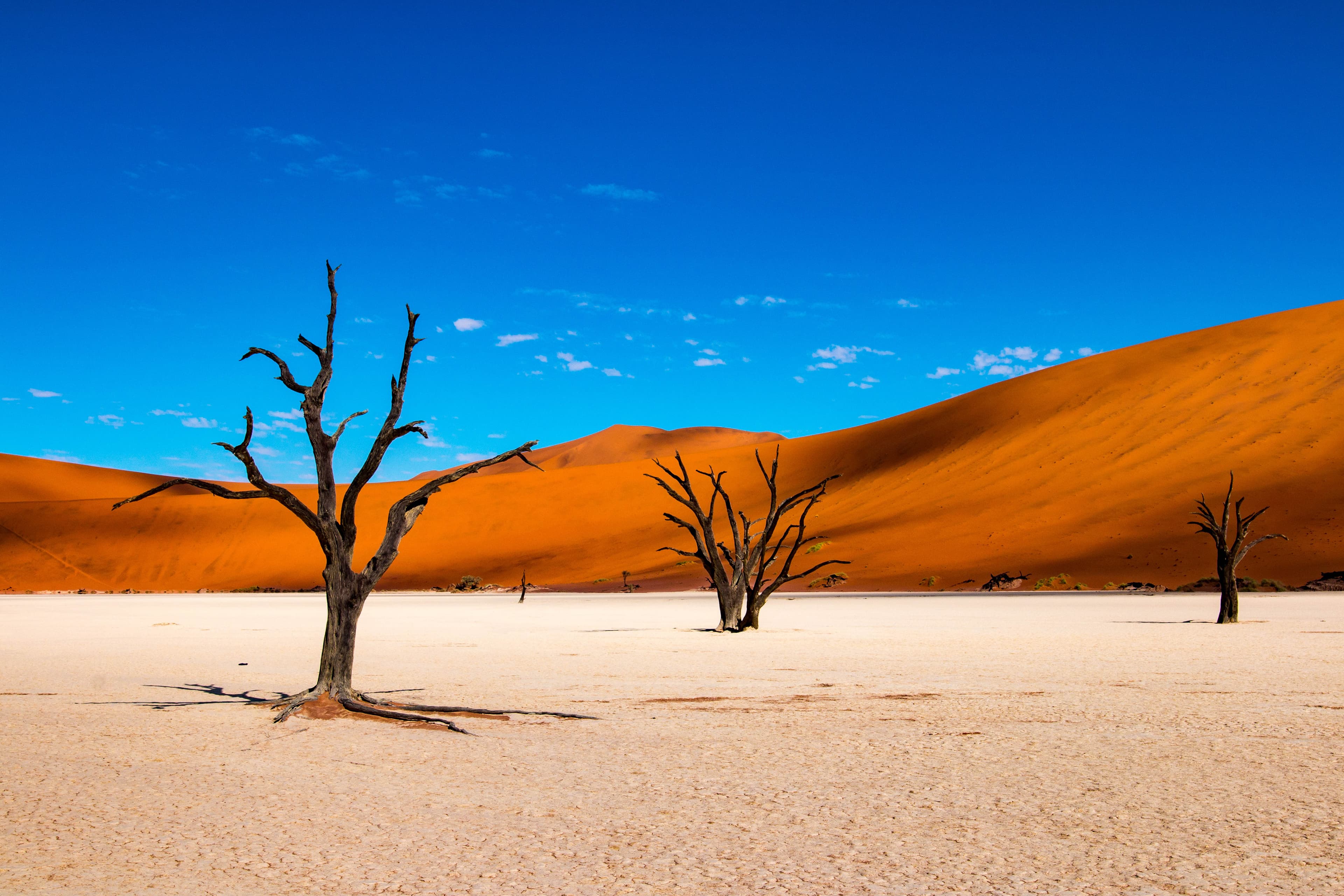
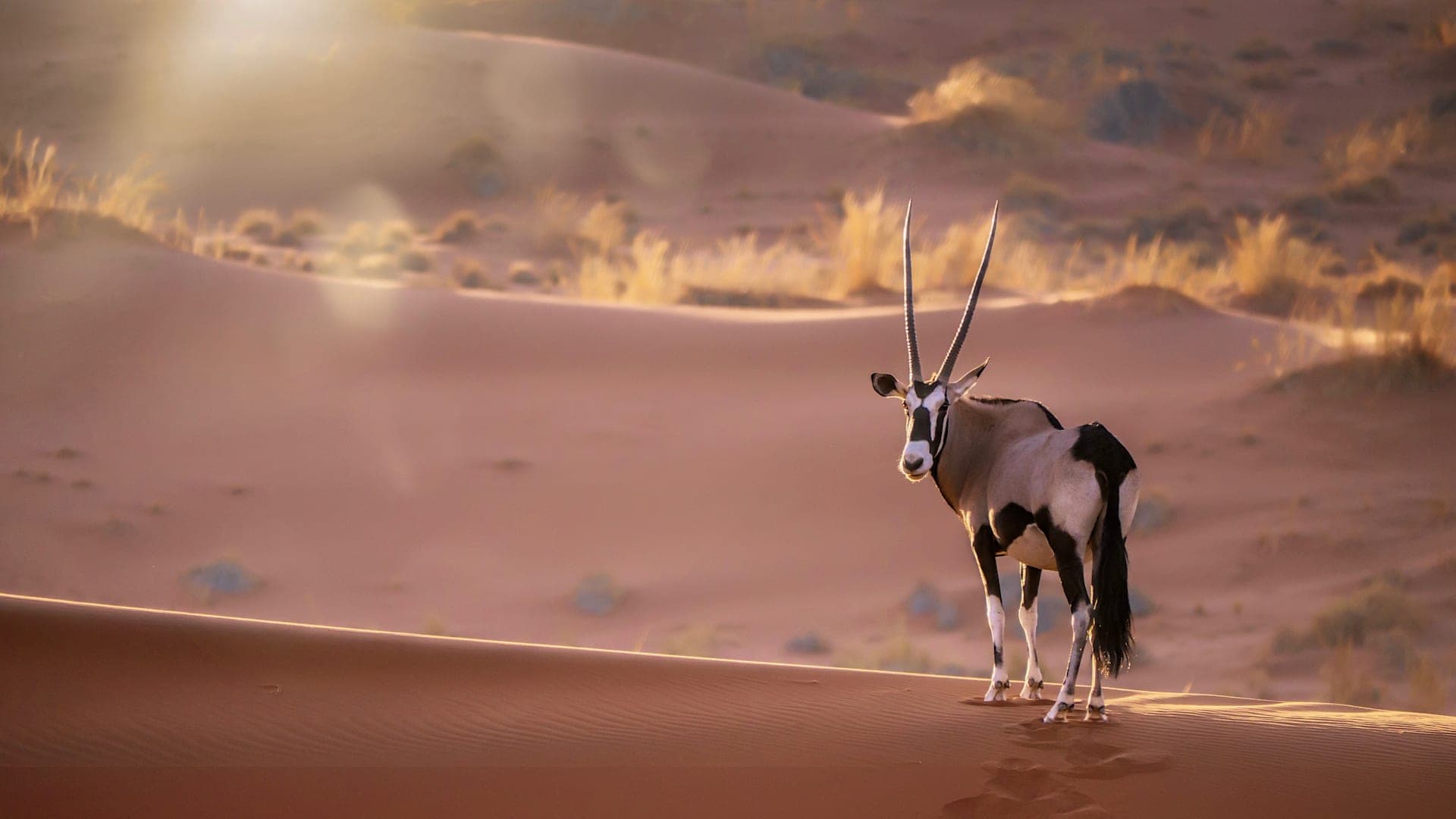
The Namib Desert is not just old, it is ancient. A stage of sand, wind and light. Right in the centre: Sossusvlei. You climb up Dune 45 in the light of the first rays of sunshine, while the horizon burns. Dead Vlei? An end-time painting of burnt tree skeletons. The Sesriem Canyon tears open the earth - rugged, silent, archaic. And then the Kalahari: not desert, but flaming savannah. Your off-road adventure begins in Mariental - with sand, oryx and starry skies. When night falls, you are lying in your glamping tent - somewhere in the middle of nowhere. And you know: this is not a dream. This is Namibia.
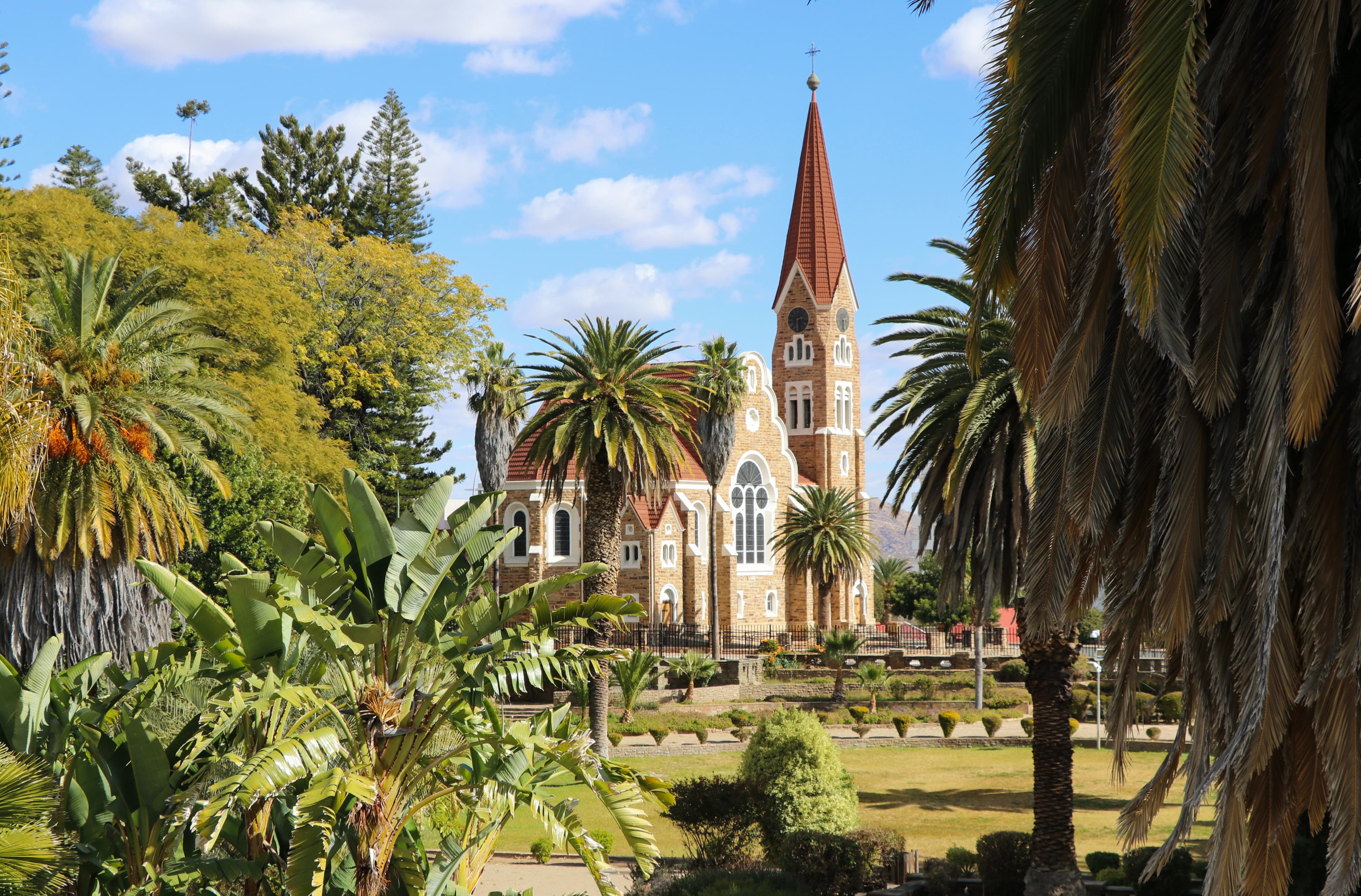
Windhoek is your springboard to adventure - urban, lively, but never far from the wilderness. Colonial buildings meet street life, rooibos meets flat white. Life pulsates on Independence Avenue, while Christ Church watches silently over everything. Markets, museums and craft breweries give you a first insight into the country and its people. Ideal for last-minute errands, a skybar-style sundowner - and your jump into the vastness of Namibia.
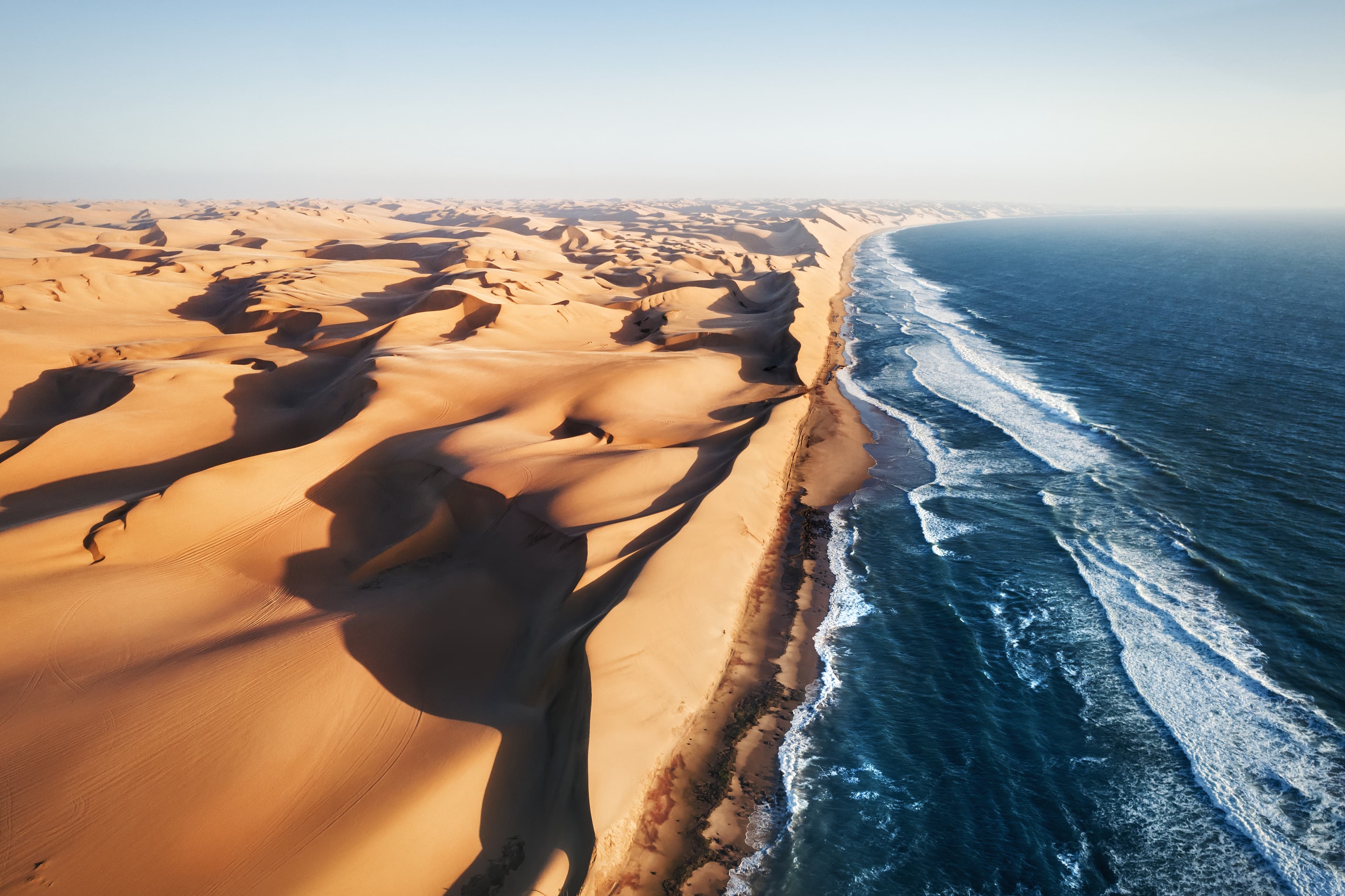
Atlantic air on your skin, the sand of the Namib in your eyes - and street names such as "Bismarck" or "Kaiser Wilhelm" flashing between the palm trees: in Swakopmund, you can experience German-Namibian history up close. At the same time, the town is your basecamp for action - riding quads through the desert, sandboarding on dunes or watching seals and dolphins in a kayak. Then: change direction to the north. The Skeleton Coast welcomes you with its rugged and dramatic scenery. Wafts of mist, shipwrecks, seal colonies - everything looks like something out of a post-apocalyptic film scene. Walvis Bay? A lagoon of light and life. Flamingos shimmer in the shallows, dunes plunge into the sea. And you are right in the middle of it all.
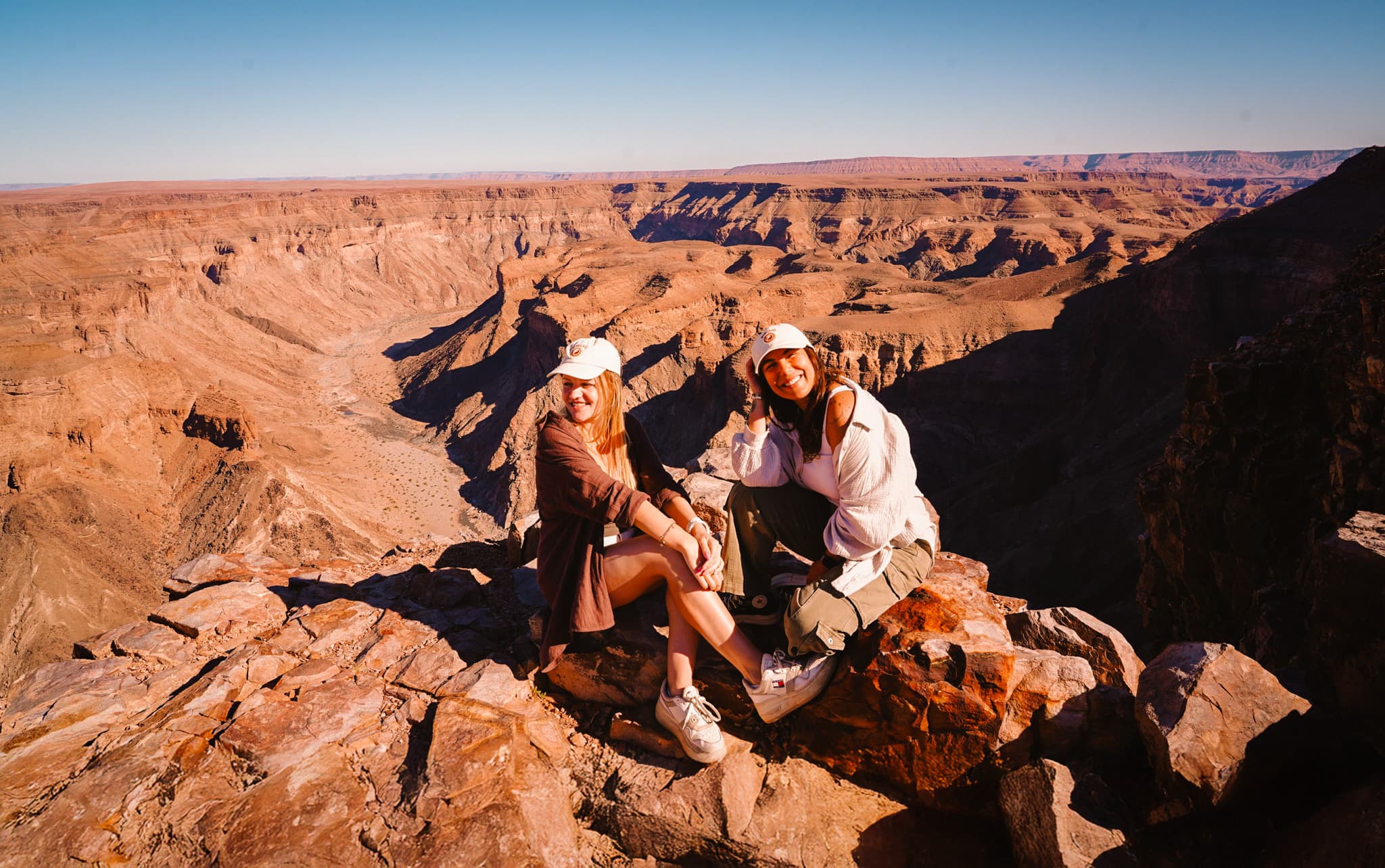
Lüderitz feels like a border town - Atlantic waves thunder against the coast, while the Namib spreads out behind you. Between the Art Nouveau and the sand, the German colonial history lies open, visible in the street names and architecture. Just a few kilometres further on: Kolmanskop. Once the centre of the diamond rush, today swallowed up by the desert. Abandoned villas, sand up to the ceiling - like a film set that time has forgotten. Then it gets epic: the Fish River Canyon shows you what nature can really do. 160 kilometres of rock, colours, depth. You are standing on the precipice.
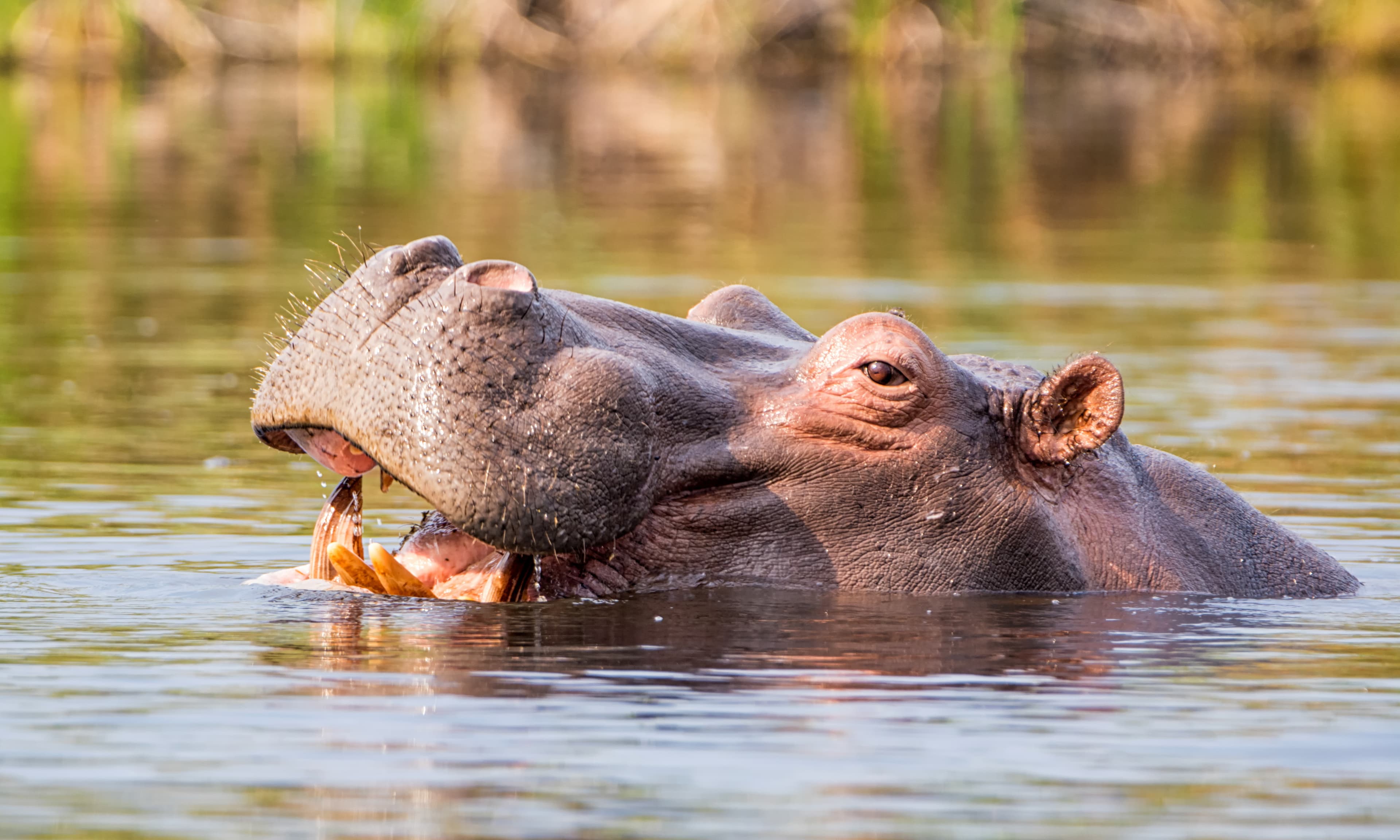
Namibia shows itself from two completely different sides here: In Damaraland, the landscape glows in orange and ochre, rocks rise out of the steppe like sculptures. The Brandberg, the highest peak, watches over ancient land, while the granite at Spitzkoppe glows in the sunset. Twyfelfontein tells stories in stone - rock engravings, thousands of years old. And right in the centre: People who live their culture. The Herero characterise the region with their language, pride and style. Then the picture opens up - Caprivi. Suddenly tropical, lush green, full of water and life. Rivers run through the wilderness, elephants and hippos cross your path. And on the horizon: Botswana, Zimbabwe, the Victoria Falls. This is where Namibia shows just how diverse it really is.