Best time to visit
The best time to visit Montenegro is between May and October.
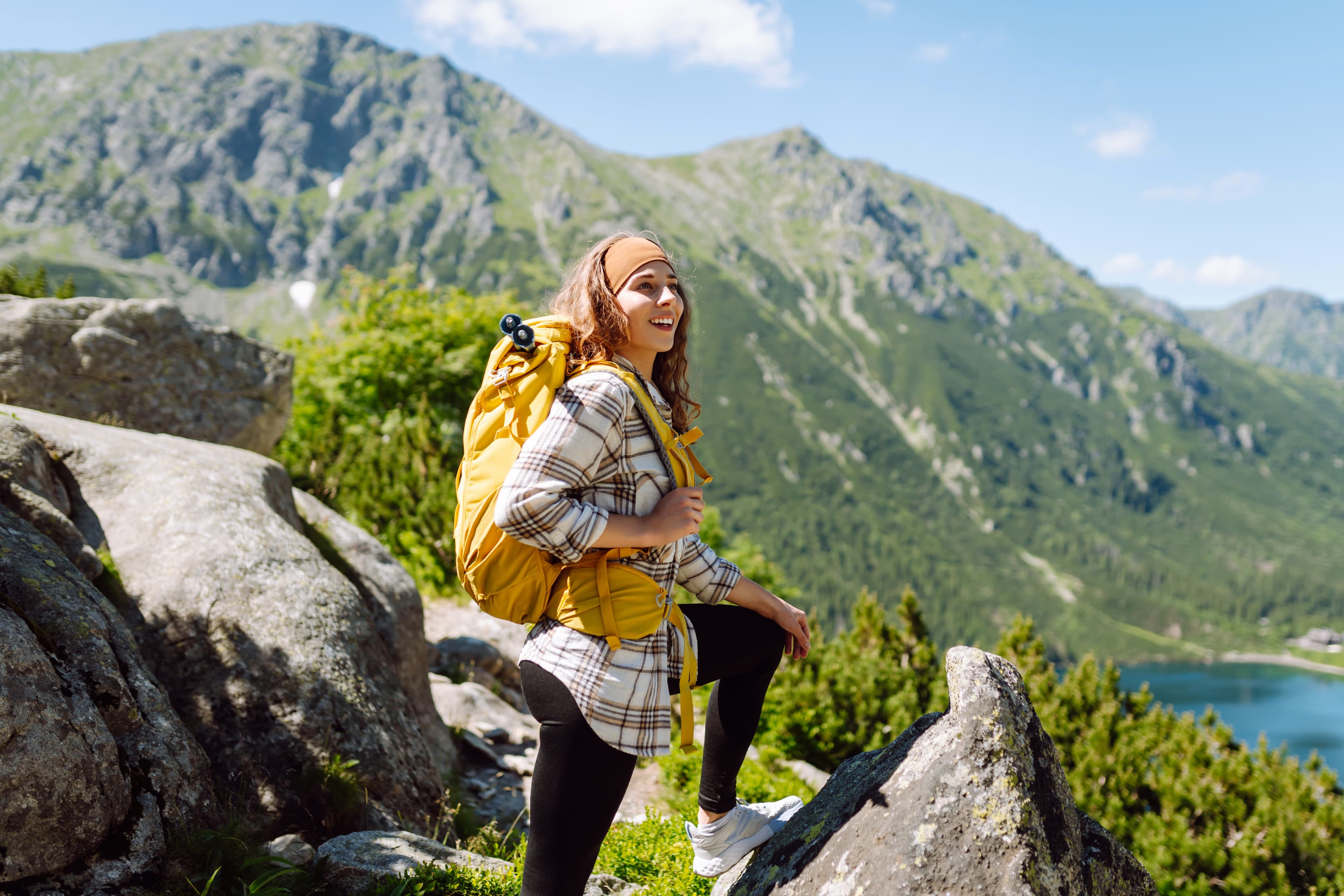
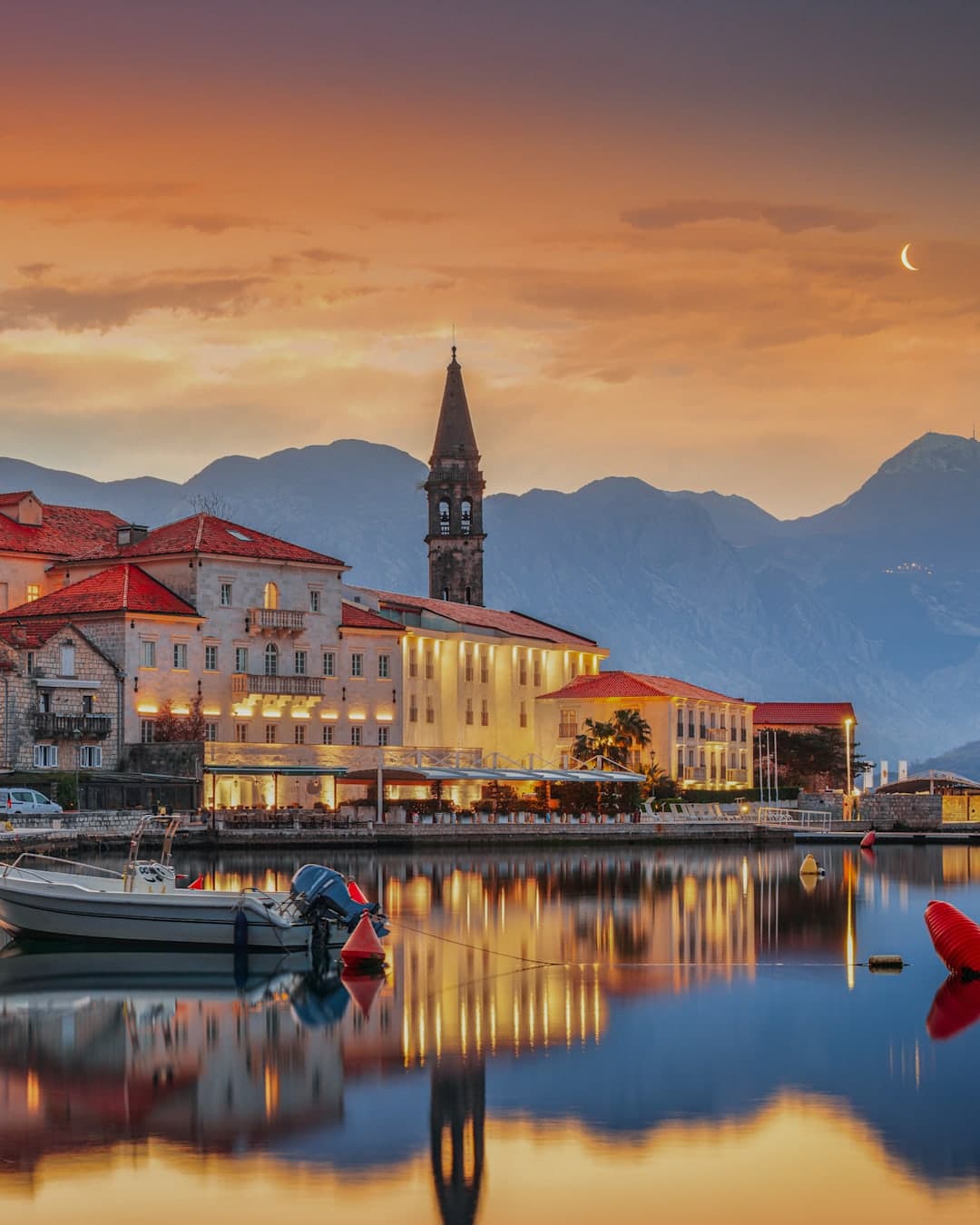
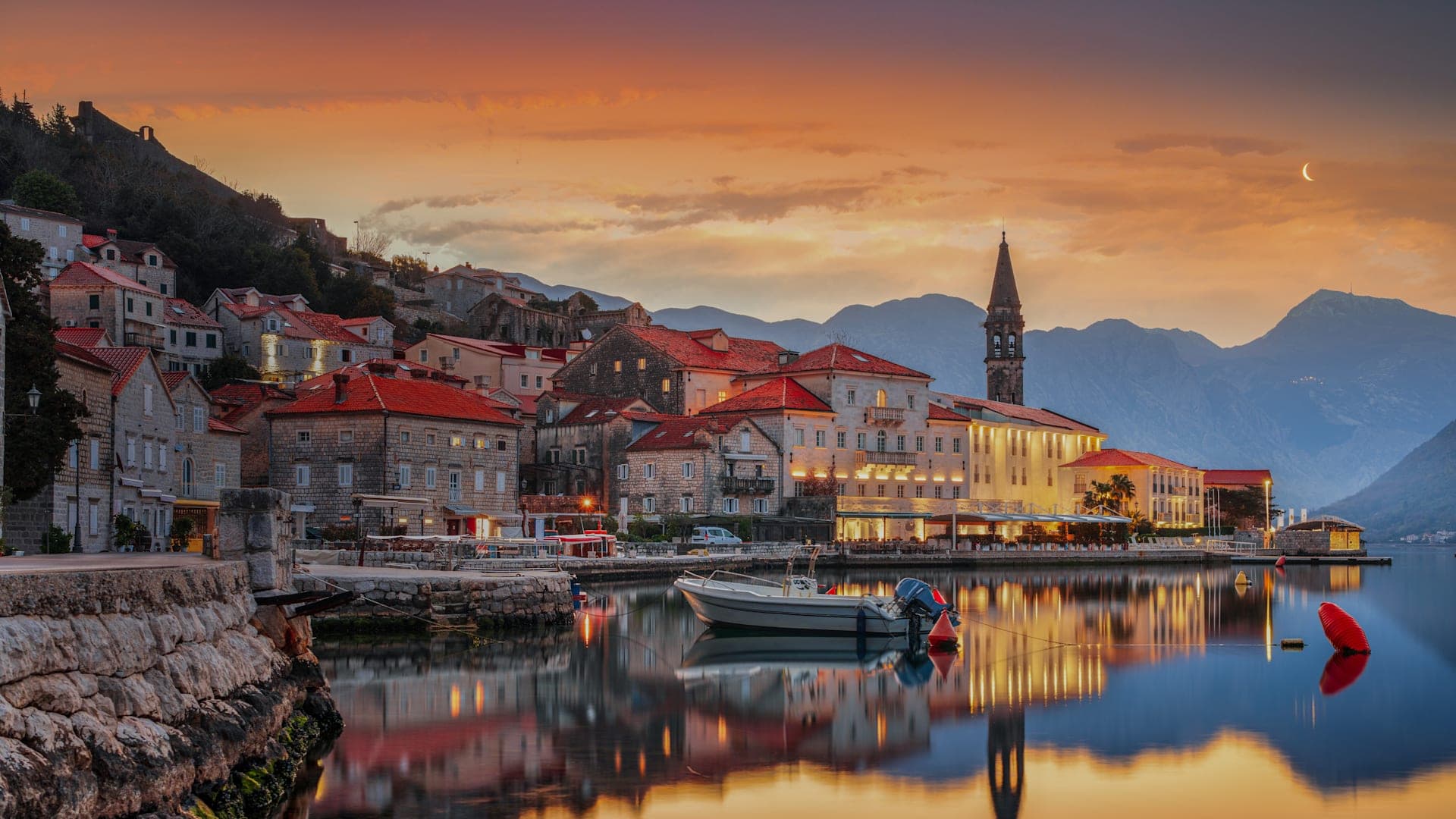
In Montenegro, the Black Mountains tumble down to the sea, most dramatically in the Bay of Kotor: limestone walls rise straight from the water, medieval harbour towns cling to the rock face, espresso is served on sun-drenched piazzas and monastery bells ring out across the bay. A mountain range further on, the Tara cuts 1,300 metres deep into the rock, with emerald whitewater rushing through the canyon below. The Adriatic carries the scent of olive groves and salt, with rocky coves, sandy beaches and harbour towns such as Budva and Bar strung along the shore. Where the coast ends, the national parks begin: Durmitor as a UNESCO World Heritage Site, the ancient forest of Biogradska Gora and the Prokletije mountains, with trails where you can walk for hours without seeing another soul. Which Montenegro you make your own is entirely up to you.
The best time to visit Montenegro is between May and October.
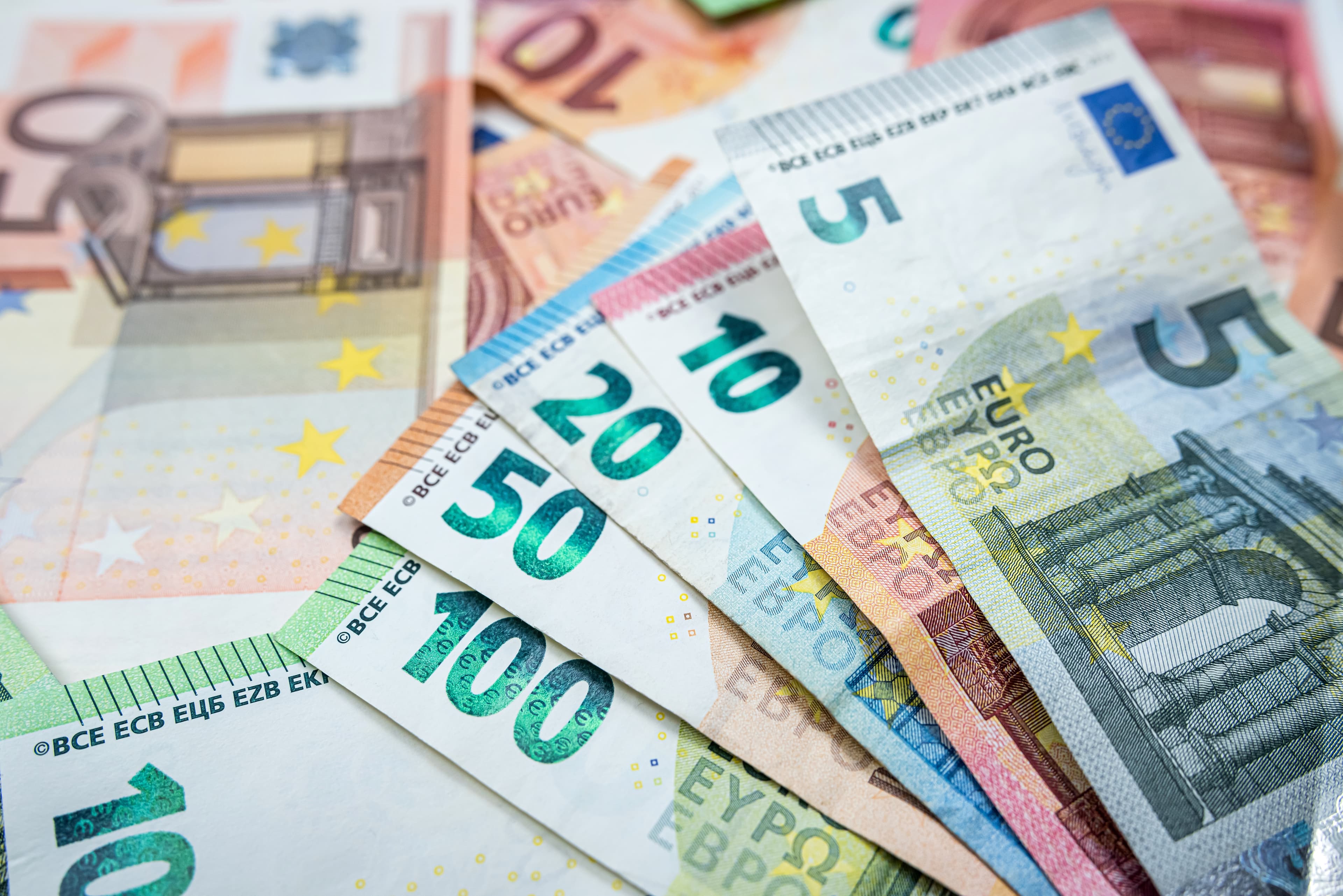
The local currency is the euro (EUR).
A direct flight from the UK takes around 2.5 hours.

The official language is Montenegrin, but you'll get by just fine with English.
Montenegro is full of highlights, but these must-sees belong on your bucket list.
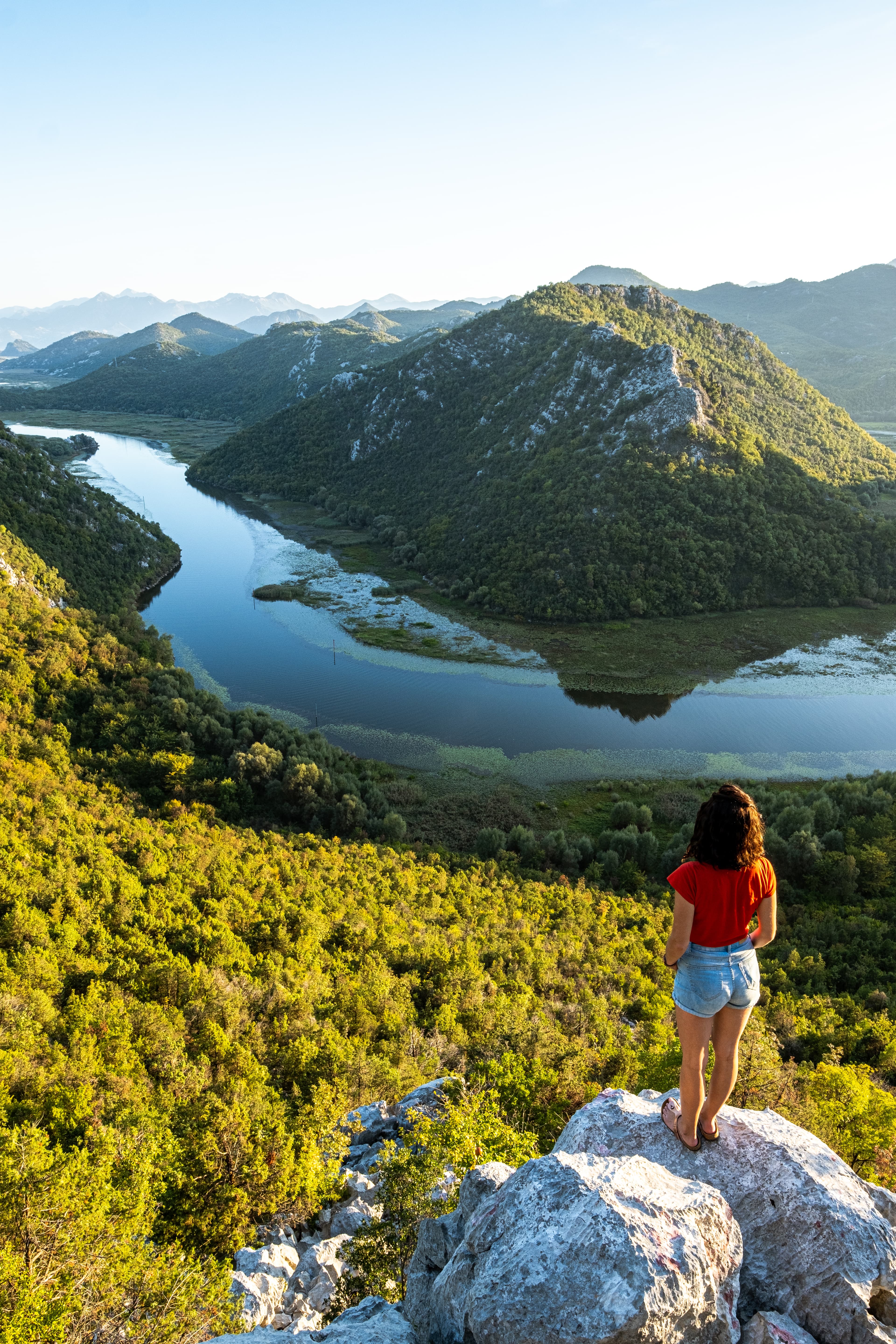
Podgorica was known as Titograd until 1992. Today the turquoise Morača river winds through the city, where Ottoman ruins meet Yugoslav modernism along its banks, the café terraces under the plane trees invite you to linger for hours and farmers sell rakija from the boots of their cars at the local markets. Thirty-five minutes away lies Cetinje, the old royal capital – quiet, idiosyncratic and home to museums housed in former embassies. Lake Skadar lies another hour further south: the largest lake in the Balkans, one of Europe's most important bird sanctuaries and ringed by vineyards and medieval monasteries. In Virpazar, pelicans perch on wooden posts – and there's a stillness here that you'd hardly expect so close to Podgorica.
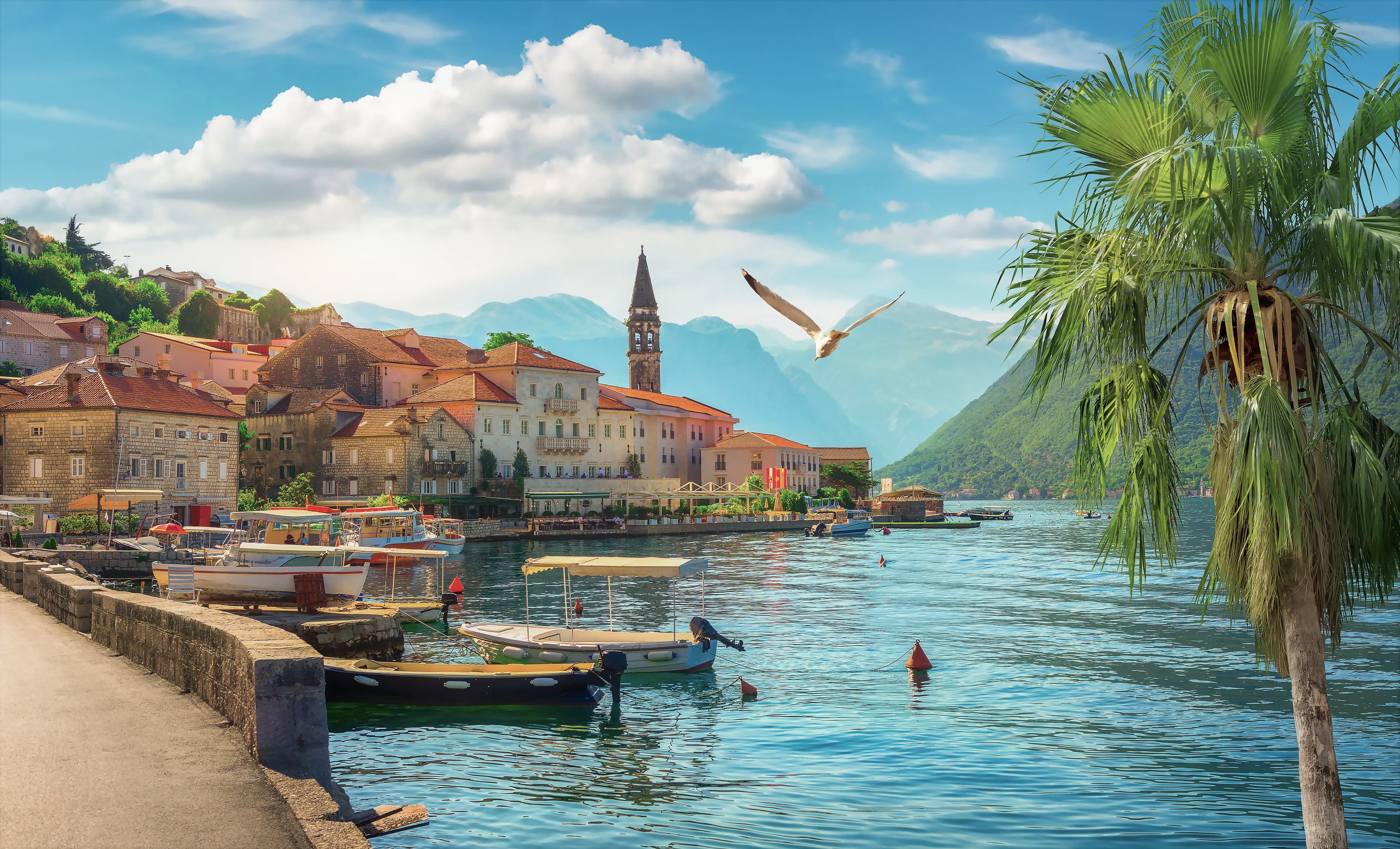
Twenty-eight kilometres of water, steep limestone mountains and four towns tucked between them, with barely a ripple on the surface: the Bay of Kotor. At its heart lies Kotor, with a Venetian old town that is a UNESCO World Heritage Site. 1,350 steps lead up to the Fortress of St John – the boats below reduced to tiny dots, the bay winding deep into the karst. A short distance further lies Perast, with two baroque churches on the waterfront and two small islands just offshore. Gospa od Škrpjela was built stone by stone by fishermen from the seabed. At the entrance to the bay lies Herceg Novi, home to the Blue Grotto, while Tivat sits in between – Porto Montenegro has transformed the old naval base into a superyacht marina.
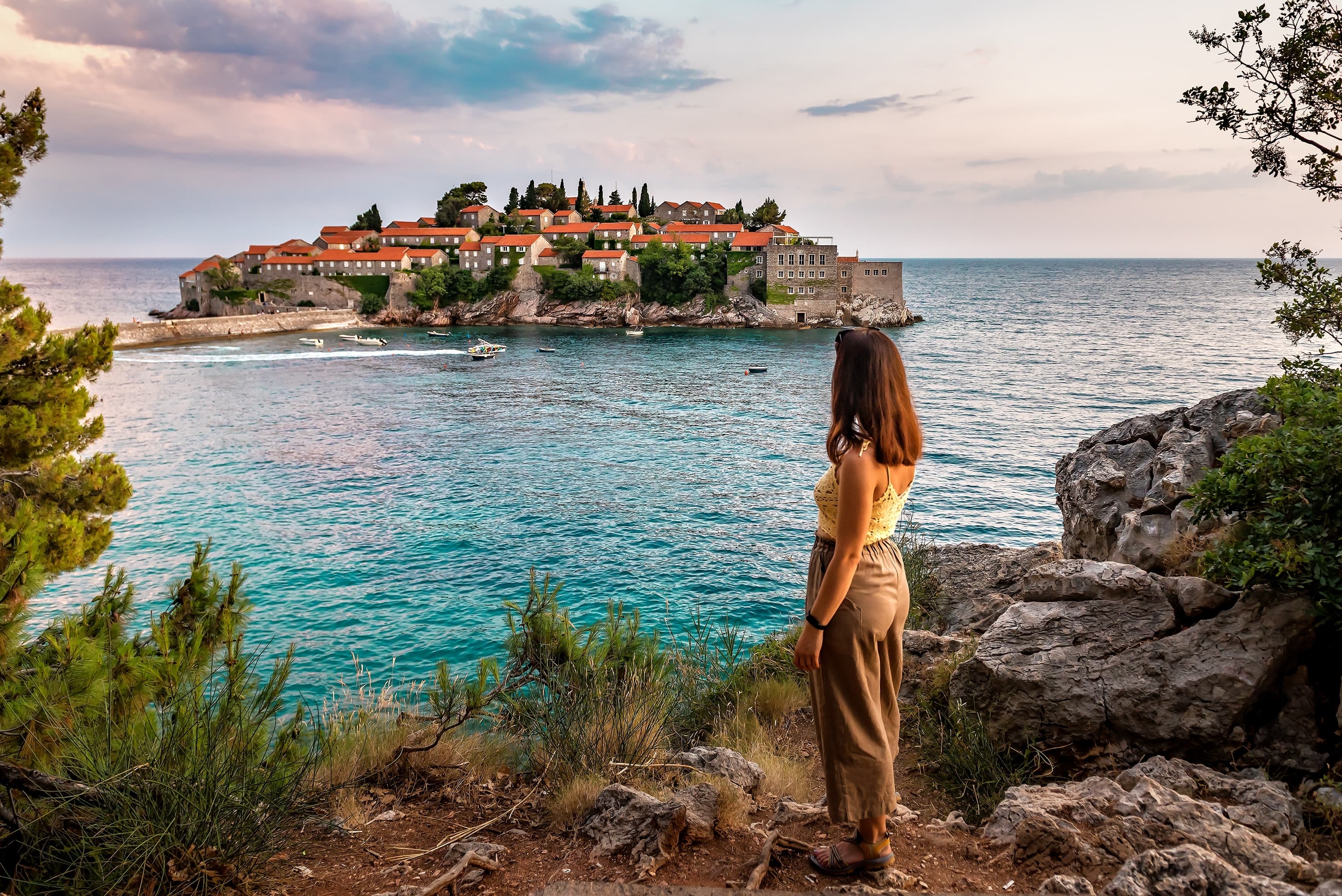
Montenegro's Adriatic coast begins in Budva, where ancient walls meet the sea. The old town sits on a peninsula, Mogren Beach stretches beneath the fortress walls and sandy beaches line the coast beyond. Sveti Stefan clings to its rocky islet like a pale pink postcard – an image that makes you slow down and pull over on your road trip. Bar is a working harbour town, but up on the hillside above it stands Stari Bar: a ruined city abandoned since the 1979 earthquake, 600 buildings across four hectares, open to the elements and utterly silent. Among the walls, an olive tree has been bearing fruit for over 2,000 years. Then comes 13 kilometres of sandy beach at Ulcinj, wide and flat with shallow water stretching far out to sea – and beyond it, Albania begins.
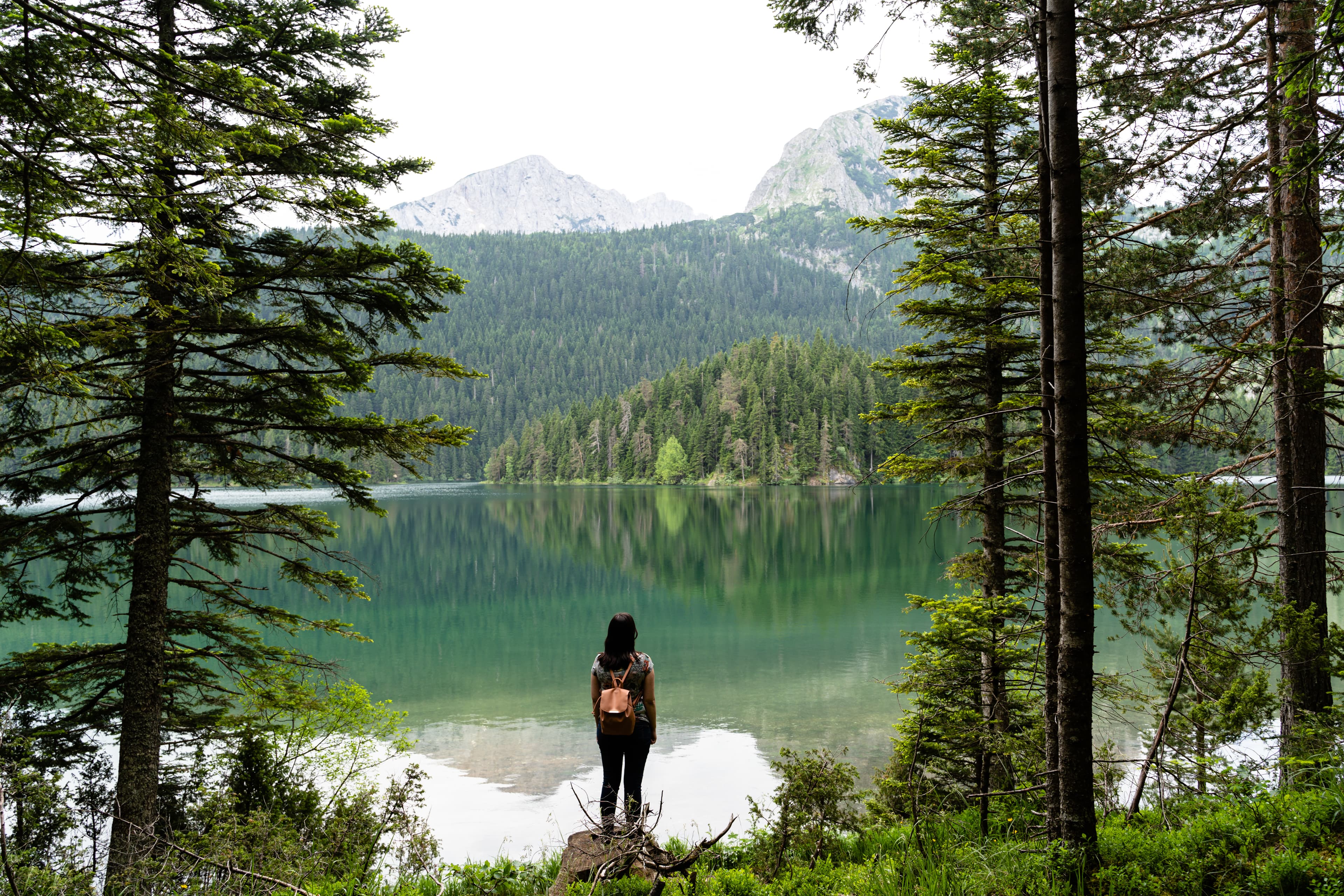
Montenegro translates as Black Mountains – and Durmitor is the reason why. Dark forests fall away into gorges, above them high alpine pastures, above them bare rock and above that nothing but sky. Eighteen glacial lakes sit between the peaks; the Montenegrins call them mountain eyes. The Crno Jezero mirrors the forest so darkly that you can't gauge its depth. Bobotov Kuk rises to 2,523 metres, and from the summit you can see as far as Bosnia and Albania. Below, the Tara cuts through 1,300 metres of limestone – when you're rafting, rock faces rise on either side and the sky above is barely wider than the river itself. UNESCO World Heritage Site since 1980. Durmitor doesn't seem to know it.
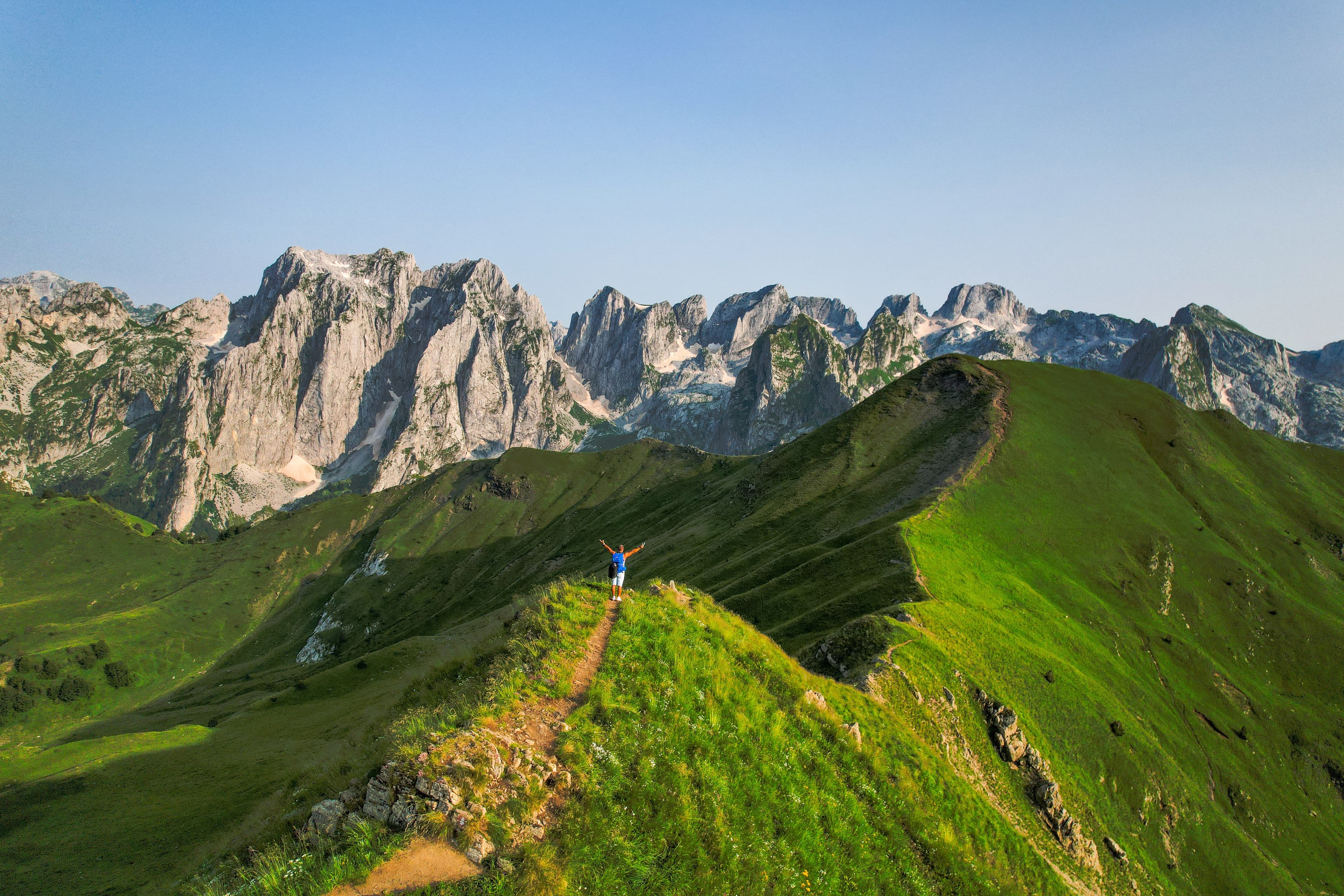
The white Ostrog Monastery clings to a sheer rock face 900 metres above the Zeta Valley, built directly into the stone in the 17th century. Pilgrims walk barefoot up to it and Montenegrins swear by its name. Beyond Kolašin lies Biogradska Gora, one of the last ancient forests in Europe – trees that have stood for over 500 years, so dense that barely any light reaches the forest floor. Then comes the Prokletije mountain range – translated as the Accursed Mountains. The name fits. Jagged peaks, glacial lakes near Plav and unmarked trails. Sutjeska National Park delivers the rest: the Vojnik summit and untouched gorges – the Montenegro that makes you forget the coast ever existed.