Best time to visit
The best time to visit Malta is April to June and September to November.
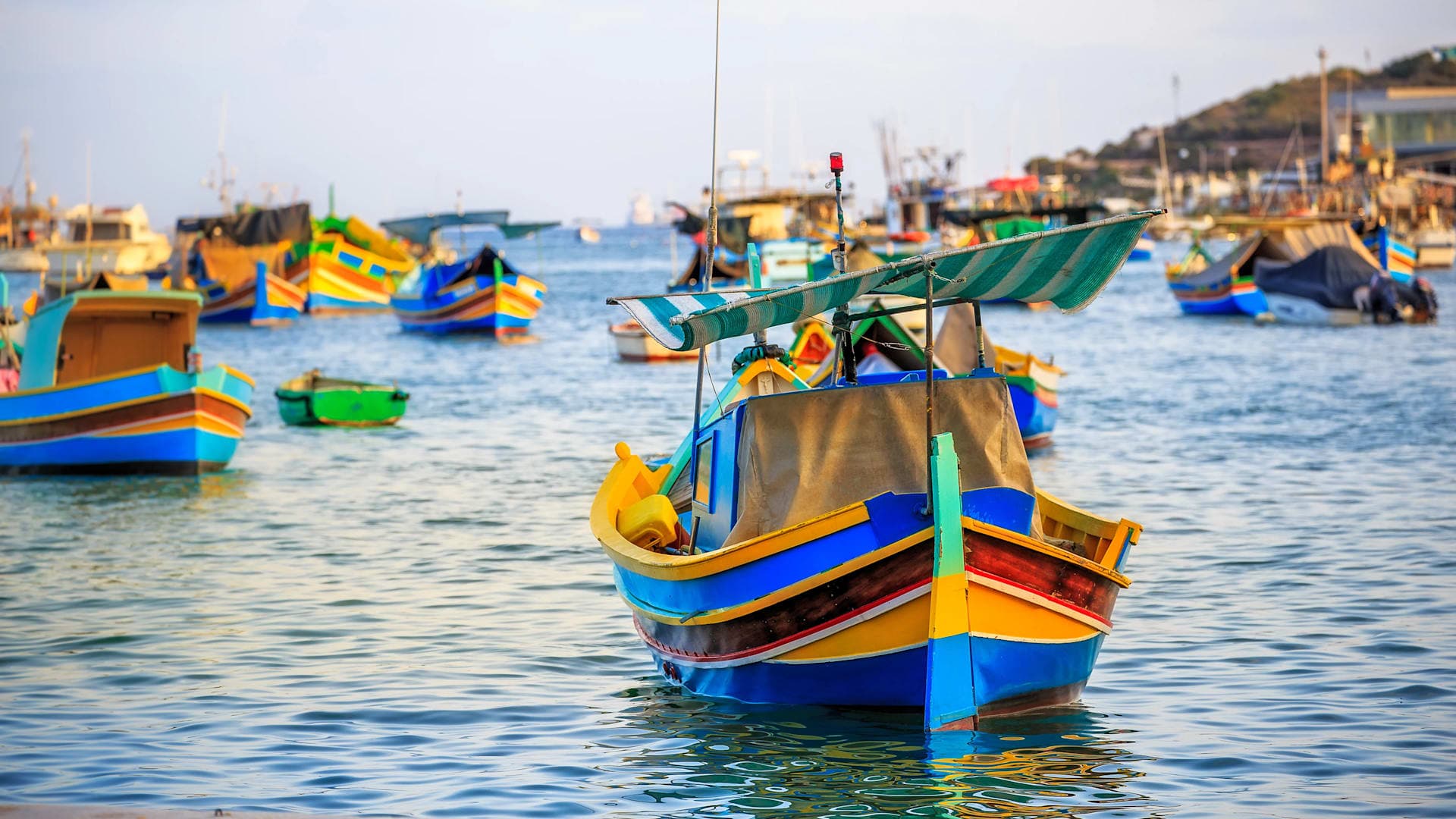
Malta is smaller than a city and older than the pyramids. Three islands, 316 square kilometres, and on them megalithic temples, baroque cathedrals, fortress walls and rocky coves – all built from the same honey-coloured limestone. In the morning you dive over sunken wrecks, at midday you walk through Valletta's alleyways and in the evening you sit over swordfish on the quayside in Marsaxlokk. On a round trip across Malta, Gozo and Comino, the ferry between islands never takes more than 25 minutes. Your trip spans 7,000-year-old temples to the Blue Lagoon – with pastizzi warm from the bakery in between.
The best time to visit Malta is April to June and September to November.
Malta's currency is the euro (EUR).

Direct flights from the UK to Malta take around three hours.

Malta has two official languages: Maltese and English. In everyday life, English gets you everywhere.
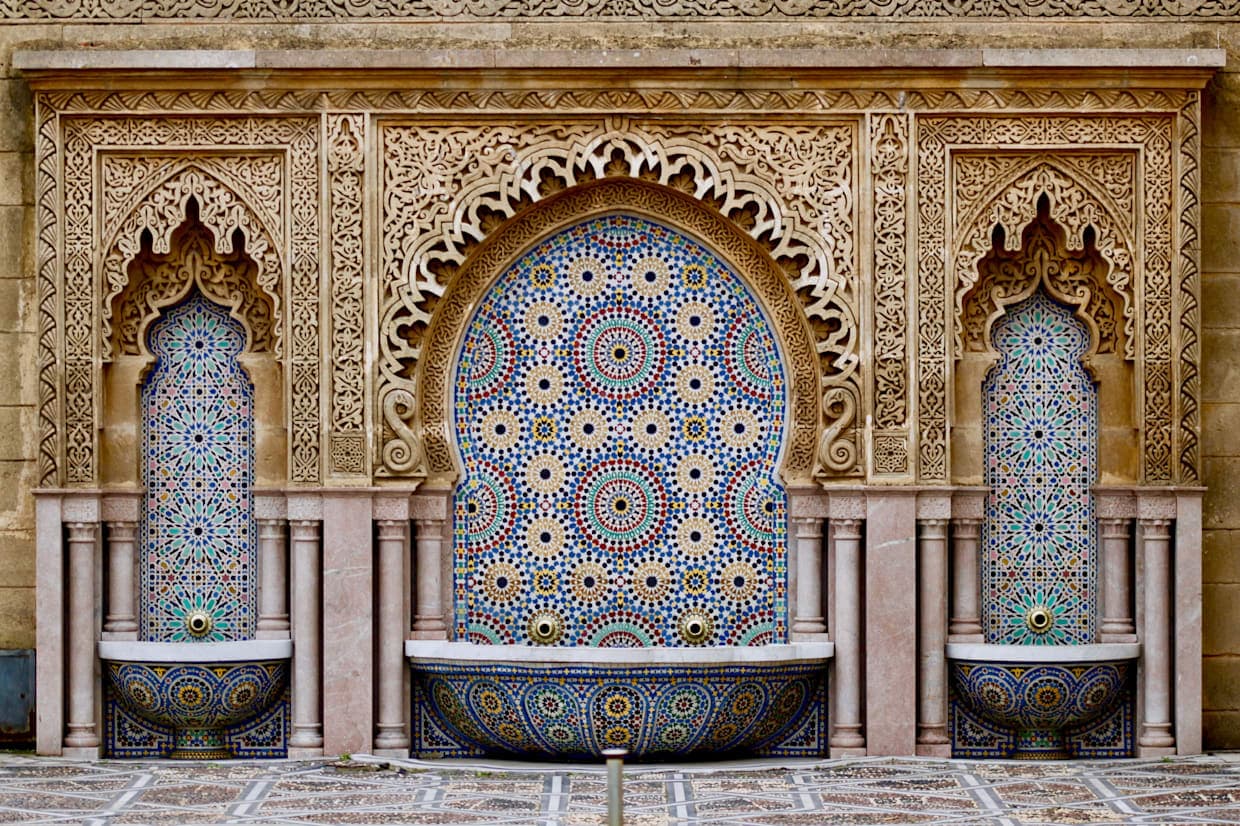
Malta is full of highlights, but these must-sees belong on your bucket list.
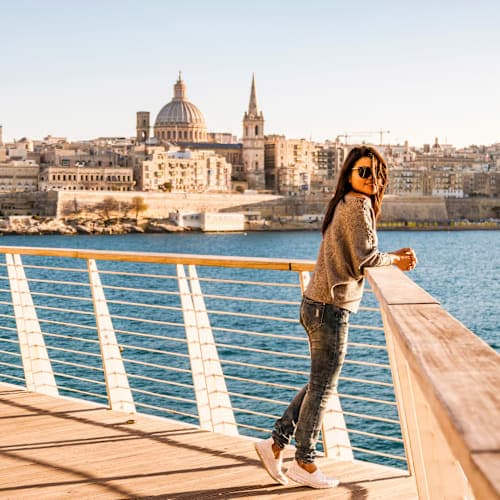
From the water, Malta's capital Valletta rises from the sea as a fortress wall. The old town follows the grid laid out by the Knights of St John in 1565. In St John's Co-Cathedral, Caravaggio's only signed painting hangs above 400 marble knights' tombs. Through the alleyways you reach Casa Rocca Piccola, a palazzo where the same family has lived since the 16th century. From the Upper Barrakka Gardens, your gaze sweeps across the Grand Harbour to the Three Cities, with Vittoriosa directly opposite and ferries crossing between the shores in Valletta's harbour. At the tip, Fort St Elmo has stood in the wind for 450 years.
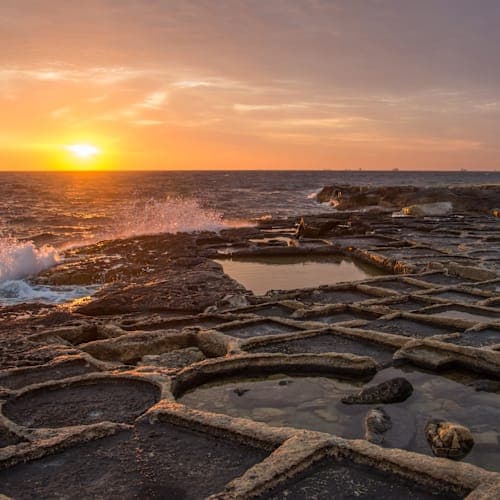
After 25 minutes on the ferry, Gozo welcomes you – greener and quieter than Malta. Victoria's Citadella looks out over the entire island, and the Ġgantija temples have stood for 5,600 years – older than Stonehenge. The pilgrimage church of Ta' Pinu rises alone among the fields, and at Ramla Bay you swim in red sand. The stone pans of Marsalforn have been drying salt for centuries, and Dwejra's rock tunnel leads from the Inland Sea out into the open water. Where the Azure Window once stood, divers now pass through the rock below. Walk along Gozo's clifftops and you'll mostly have them to yourself. Off Comino, the Blue Lagoon glows so turquoise that every photo looks too good to be true.
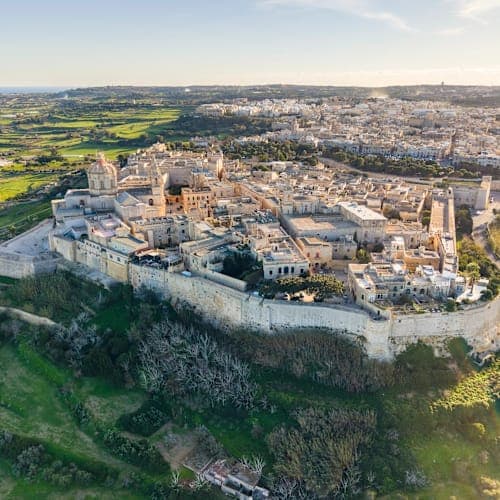
Malta's history begins underground. At the Hal Saflieni Hypogeum, you descend eleven metres into chambers hewn from the rock 6,000 years ago. Ħaġar Qim and Mnajdra stand as temples on clifftops above the sea, while the Tarxien Temples sit in the middle of a residential suburb. In Rabat's St Paul's Catacombs the air turns cool and Roman passages lead deeper than daylight reaches. Above them rises Mdina, the old capital behind its fortress walls. Beneath Mosta's Rotunda, every word echoes through one of the largest domes in Europe. Six UNESCO sites across 316 square kilometres.
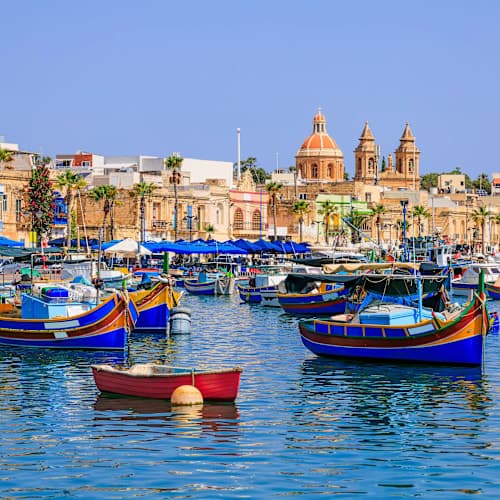
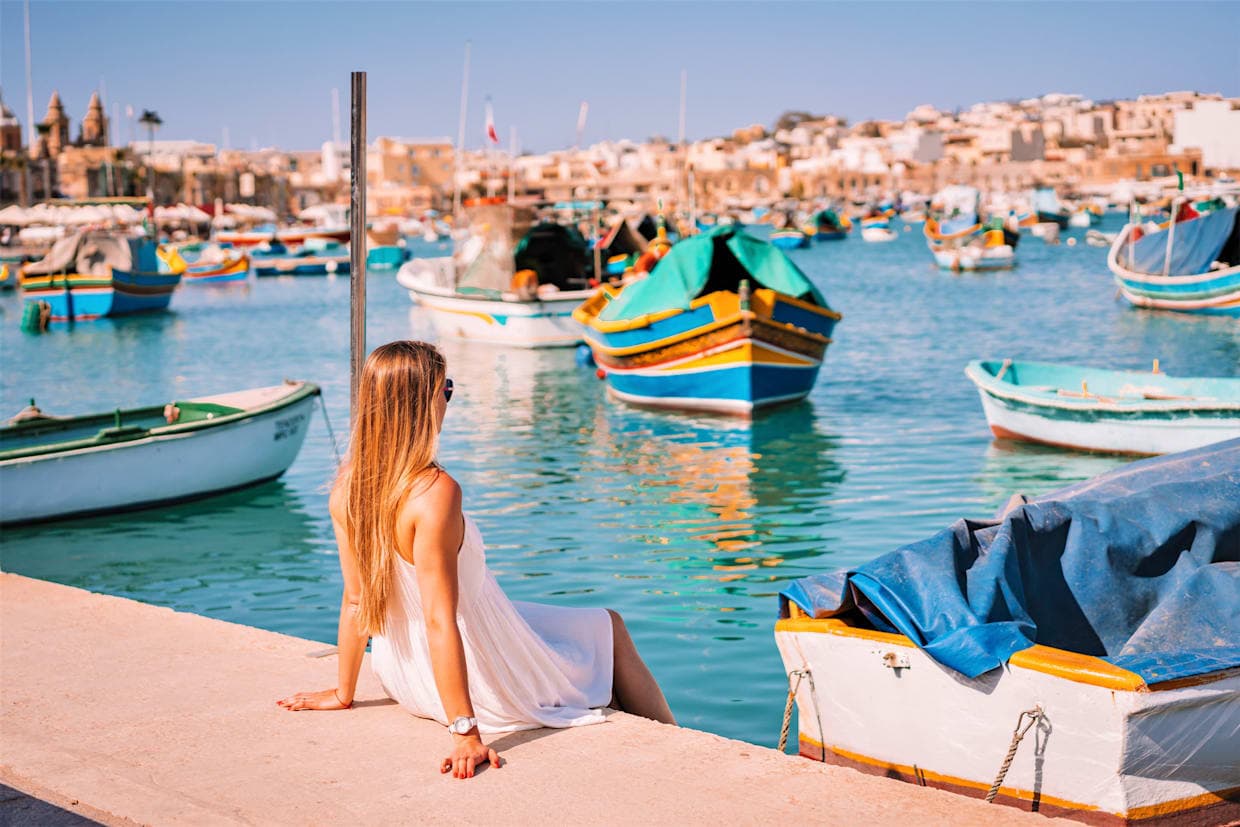
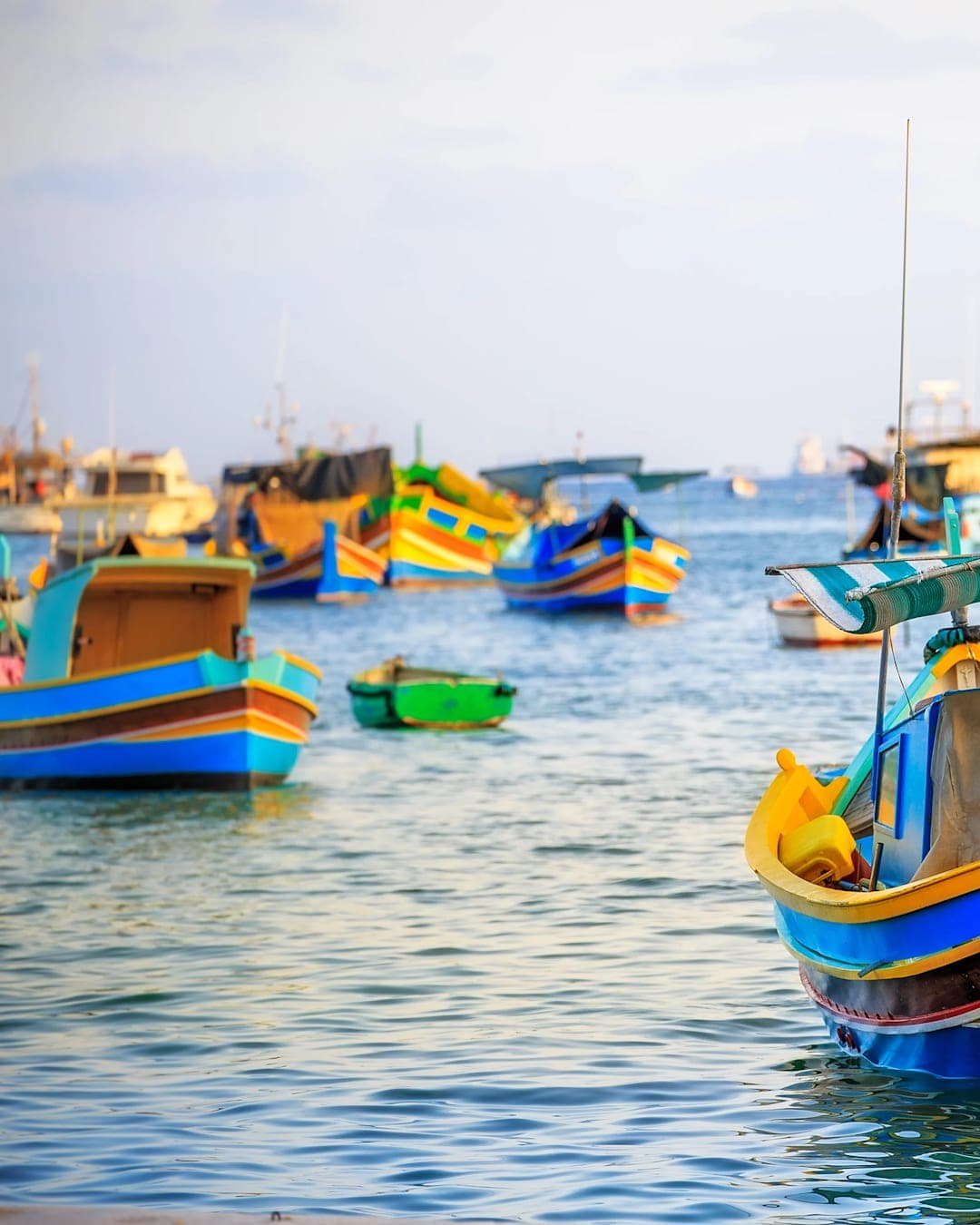
Marsaxlokk's Sunday market smells of salt and fresh catch, with brightly painted luzzu boats bobbing alongside. Malta's food tastes best right at the water's edge – pastizzi warm from the bakery, swordfish at a restaurant on the quayside. You glide into the Blue Grotto by boat, blue light breaking through the cave ceiling and the air turning cool. At St Peter's Pool, you jump from sun-warmed rock into turquoise sea. At the Dingli Cliffs, the wind carries salt up from below. In summer, festas wind through the villages – saints' statues sway above the crowd and fireworks crack until midnight. In February, Malta's carnival fills the streets with parades and masks.
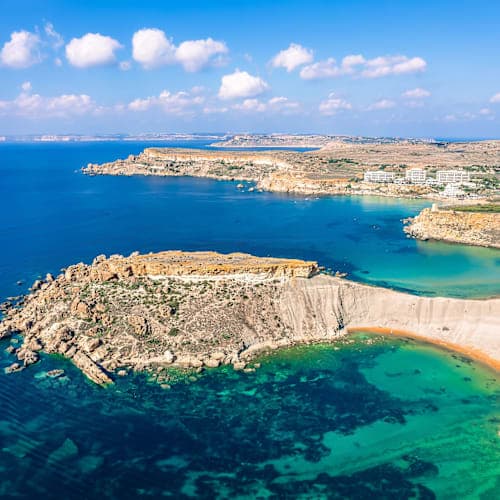
Malta's most beautiful sandy beaches are clustered in the north. At Golden Bay you walk across wide sand straight into the sea, while to reach Għajn Tuffieħa you descend stone steps – steeper, emptier and quieter. Mellieħa Bay stretches as the longest beach on the island. From Sliema's promenade, you look out across to Valletta, in St Julian's restaurants line the waterfront at Spinola Bay and when darkness falls Paceville takes over. Malta continues underwater: wreck diving takes you gliding over sunken ships and snorkelling requires nothing more than a step off the rocks. Popeye Village clings to a cove as a film set from 1980 – Game of Thrones filmed here too.